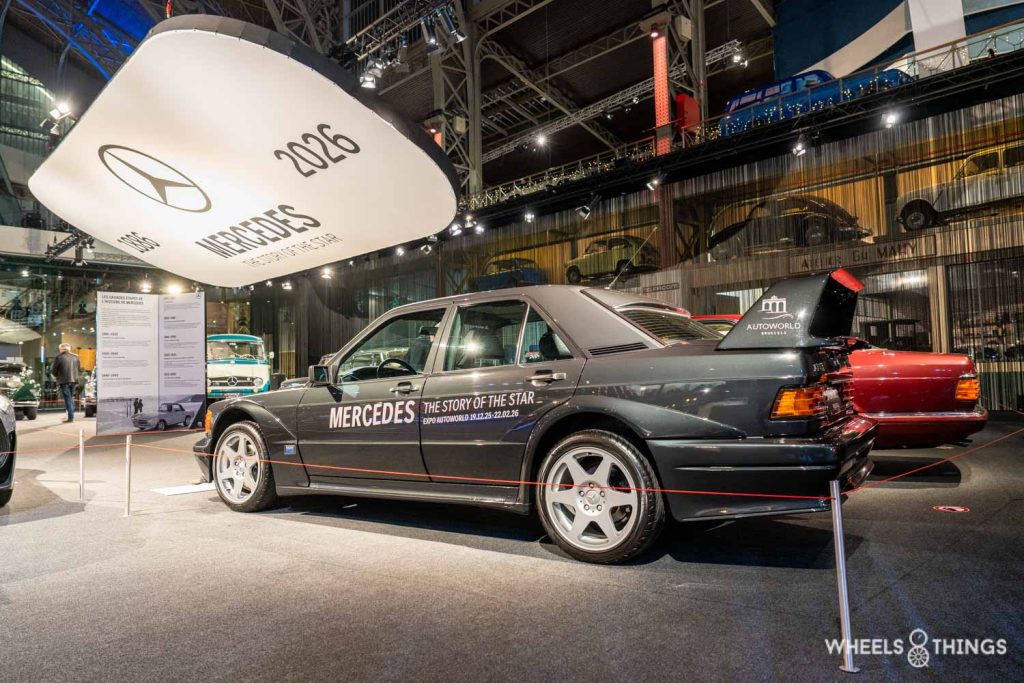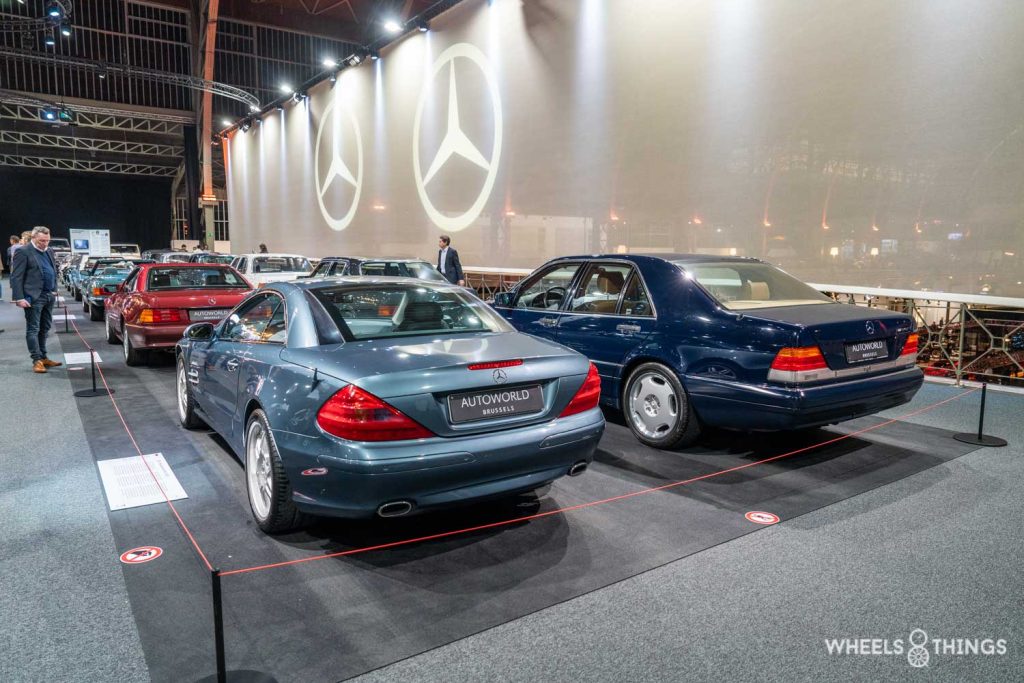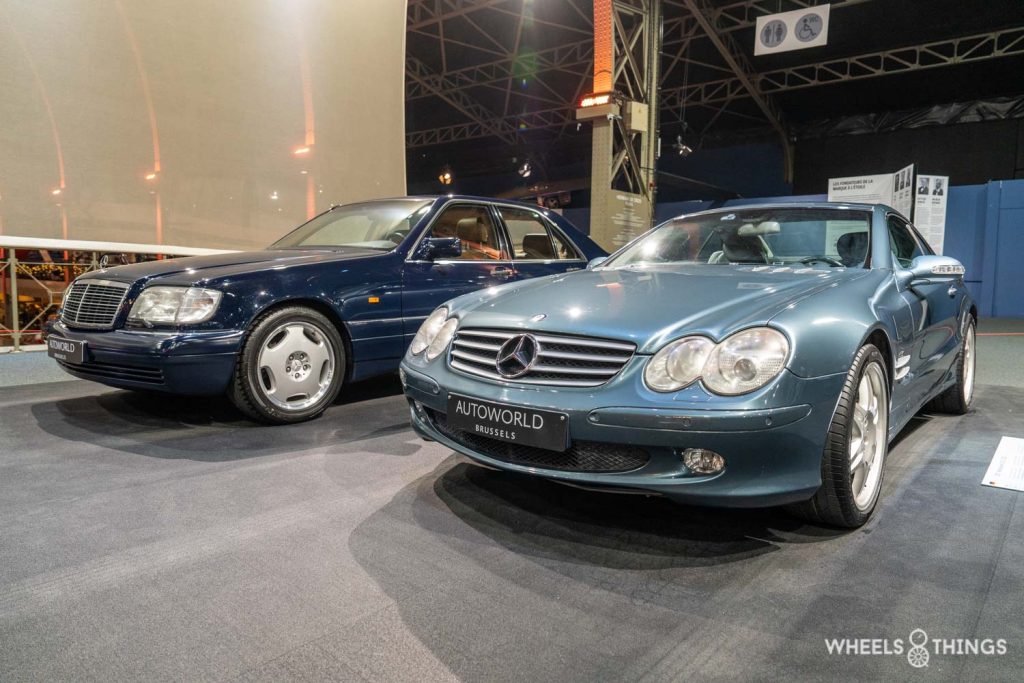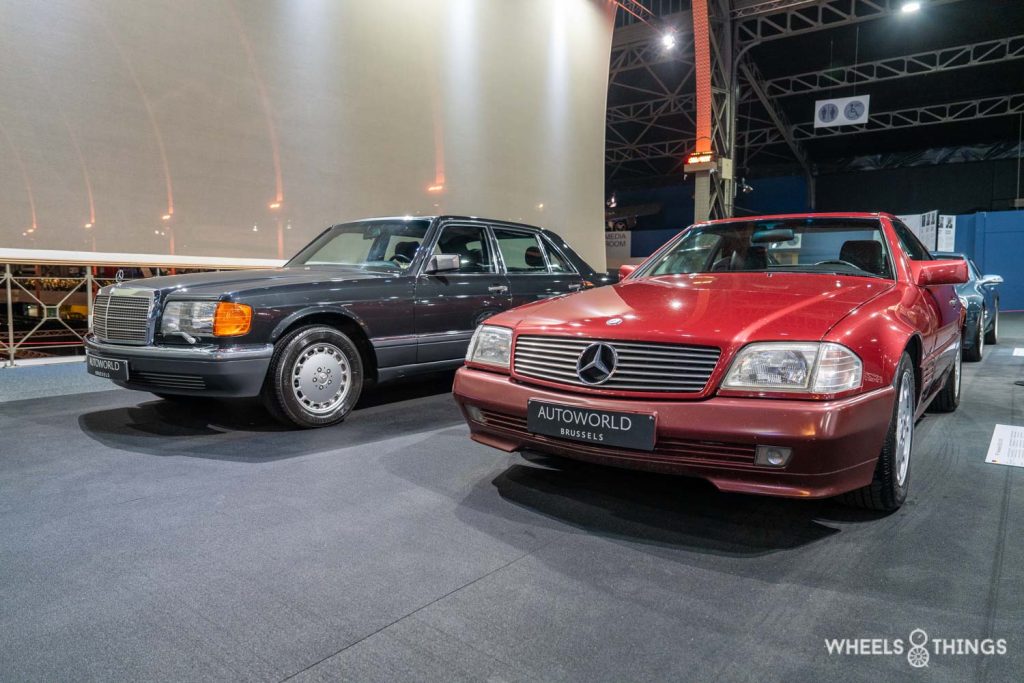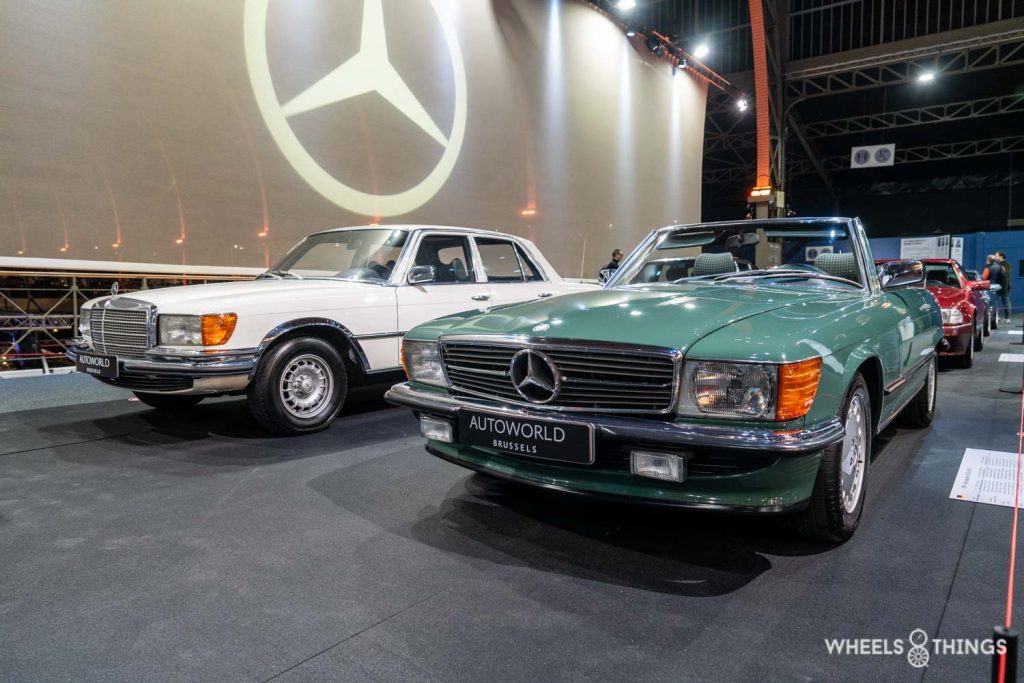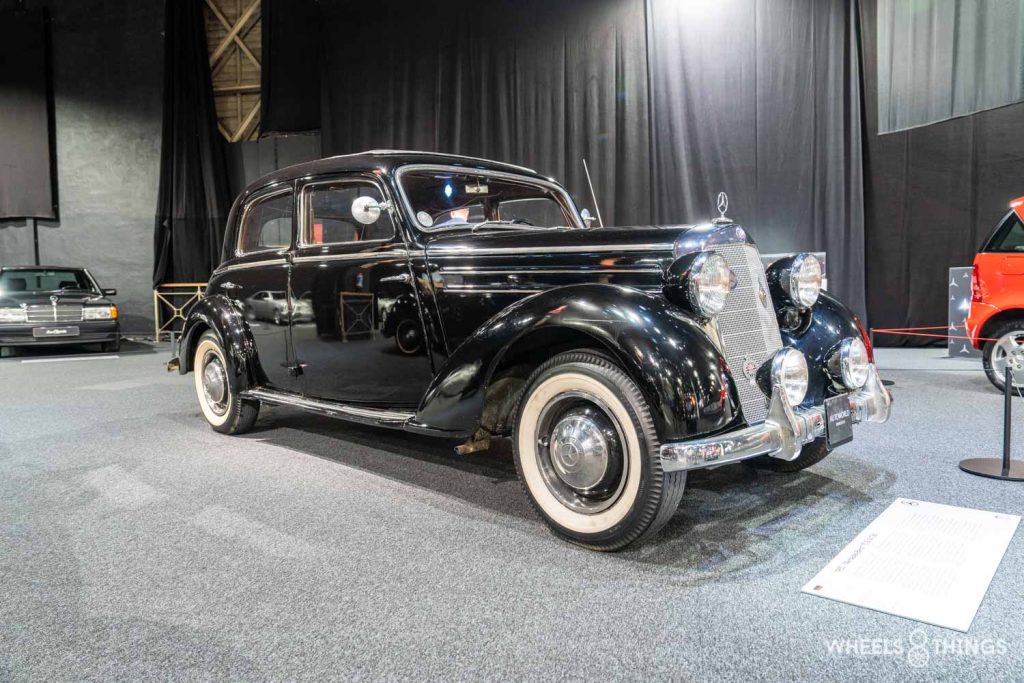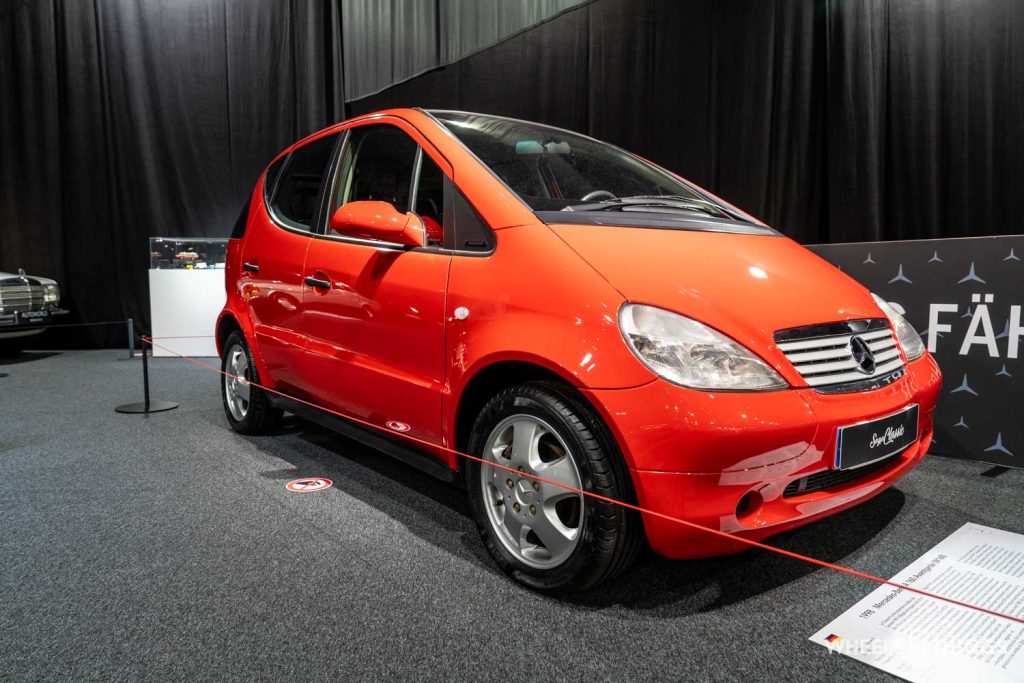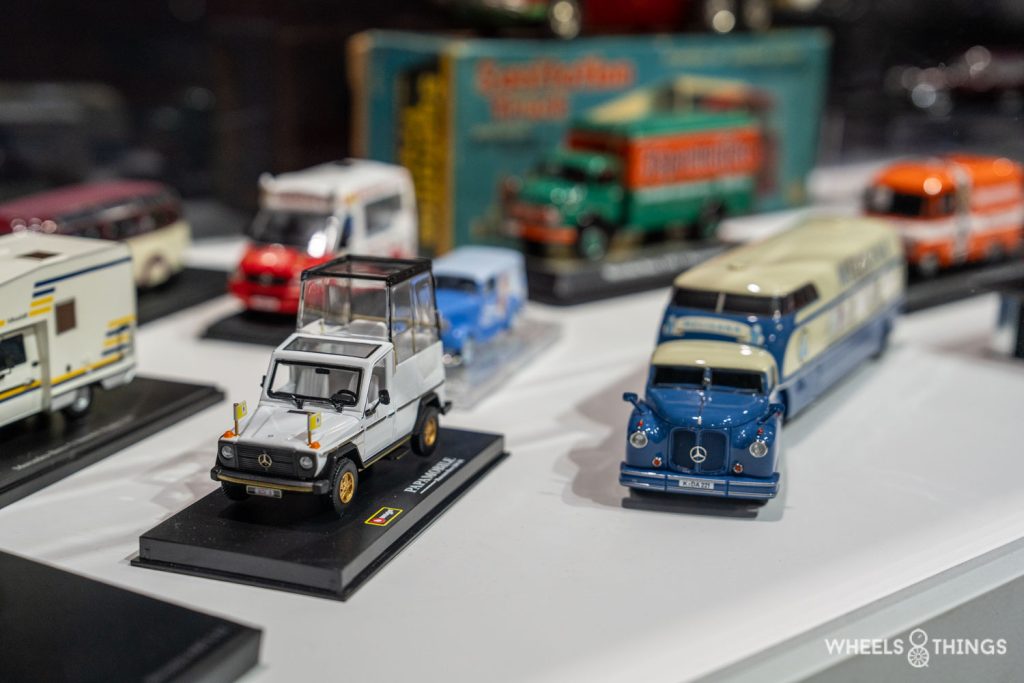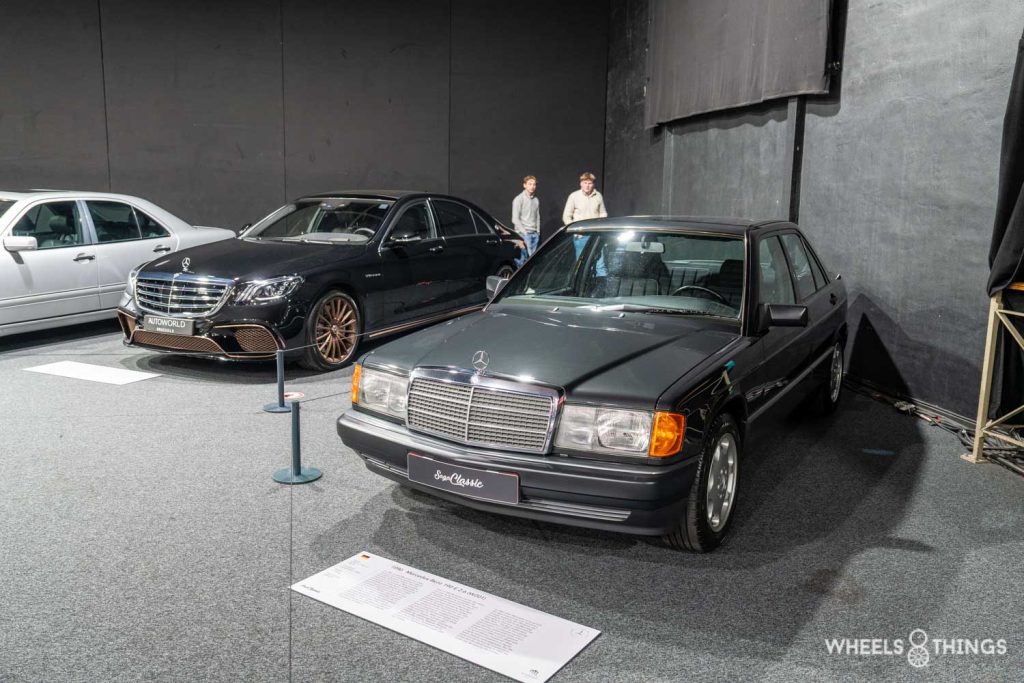
You can admire the Mercedes – The Story Of The Star exhibition at Autoworld Brussels until 22 February. More than 50 iconic vehicles are on display, ranging from the Benz Patent-Motorwagen (replica) to the AMG One. We would like to take you on a tour.
In 2026, we will not only be celebrating the brand’s 140th anniversary, but also the 100th anniversary of the merger between Daimler and Benz.
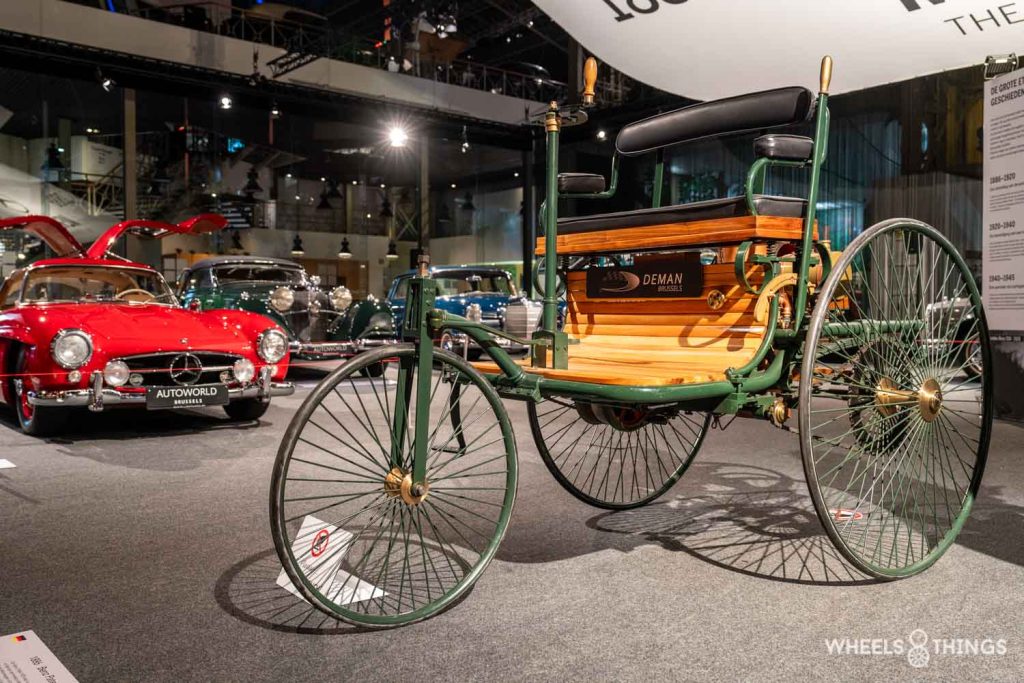
Did you know that the famous Mercedes star represents land, sea and air? Thanks to their drive for constant innovation and commitment to quality, the brand is known worldwide for prestige and technological advancement.
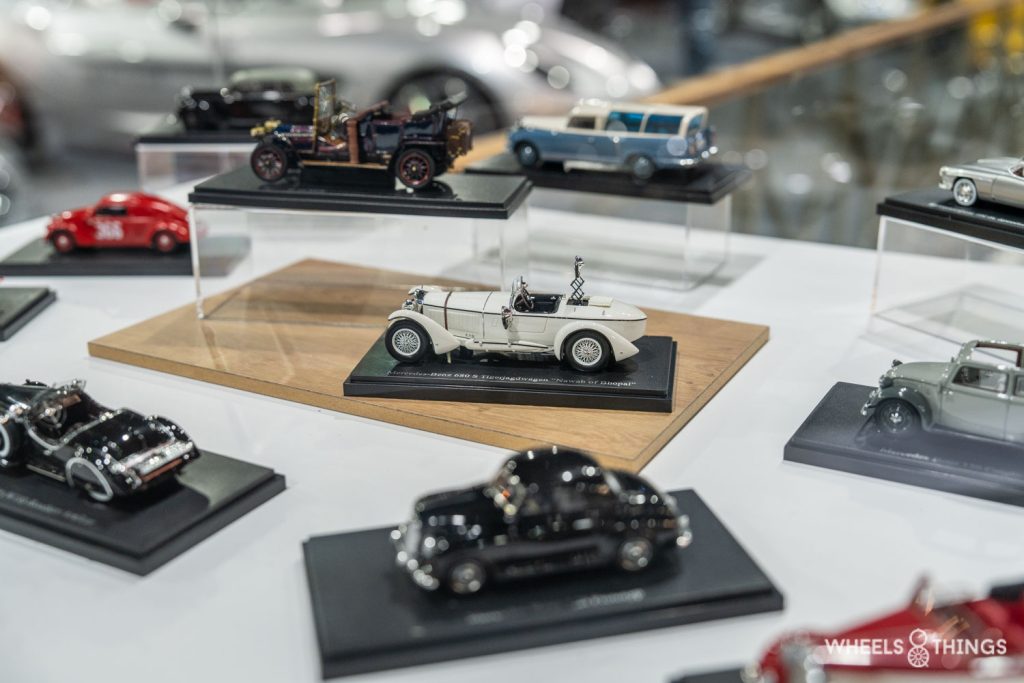
1928 Mercedes-Benz 630 S Transformable Sport
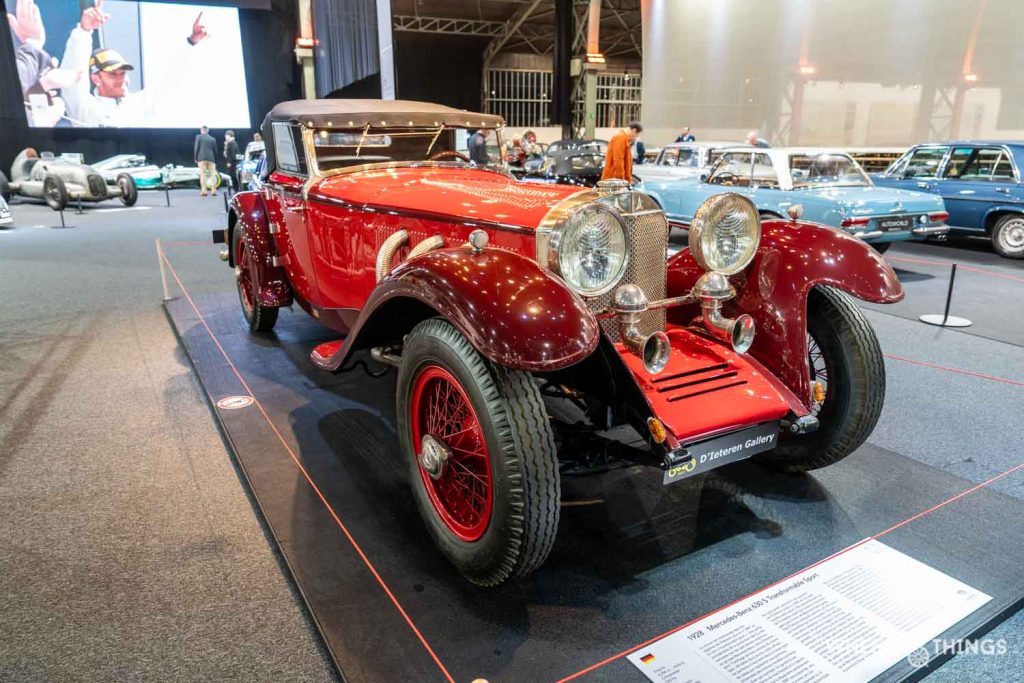
During this period (1928), a significant proportion of cars were built by external coachbuilders. D’Ieteren was also commissioned to build three cars of the same body type. The car is a two-seater and has several important features. For example, the doors are located in the high belt line, in contrast to the cut-out doors of similar models built by Auer, for example. The mudguards are separate from the running board, and the folding hood disappears completely into the body structure. No. 3981 was exported to Buenos Aires, the other two to the United States. One of these cars was exhibited at the Mercedes stand during the National Automobile Show in New York.
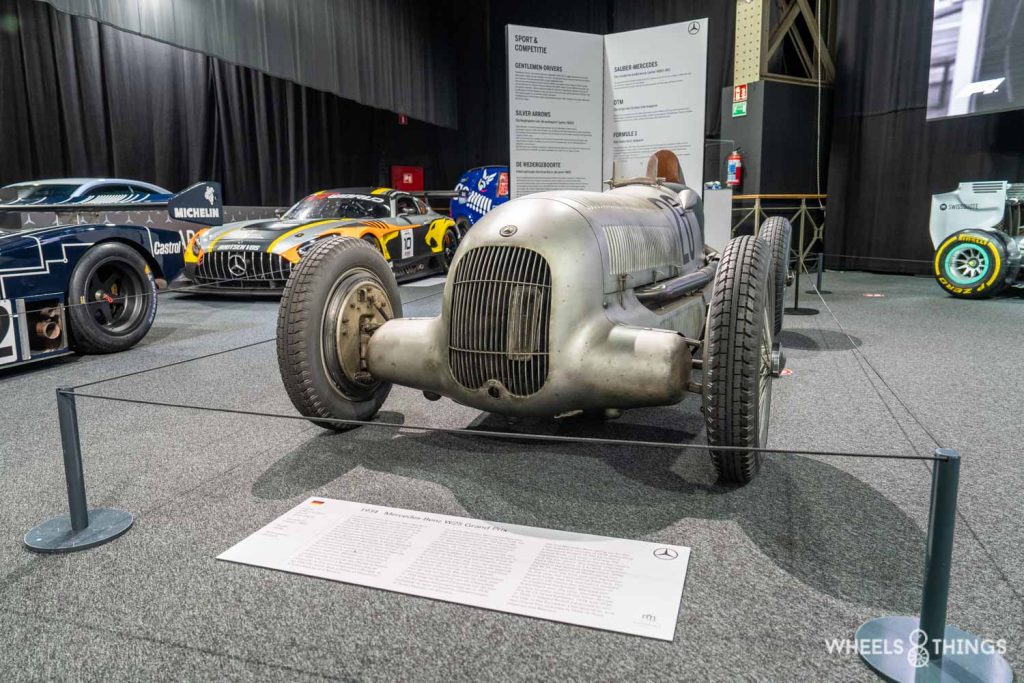
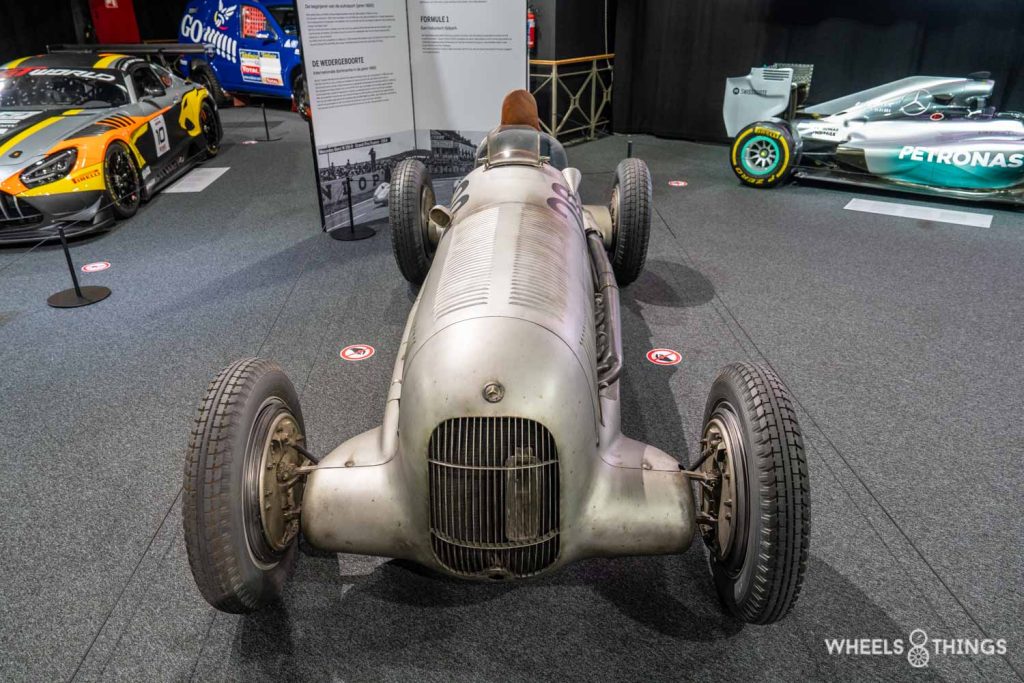
1934 Mercedes-Benz W25 Grand Prix
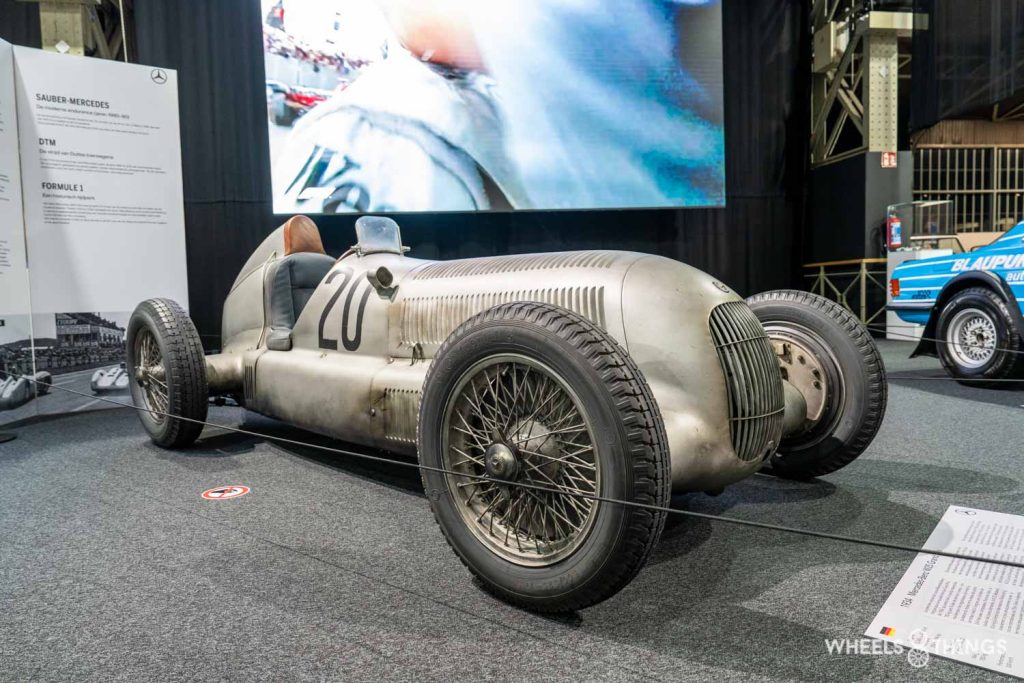
Above we see the first Mercedes-Benz racing car for the new Grand Prix formula of 1934. The rules stipulated that the total weight could not exceed 750 kg. The car had a 3.4-litre engine and a supercharger, giving it an initial power output of 354 hp. During scrutineering, the car was found to be one kilogram over the maximum weight. One day before the International Eifel Race, the mechanics decided to scrape all the paint off the car. This created the silver colour that would later give rise to the name “Silberpfeile”. Manfred von Brauchitsch won the race. In the following years, the car went on to win several more Grand Prix victories.
1936 Mercedes-Benz 170 H (W28)
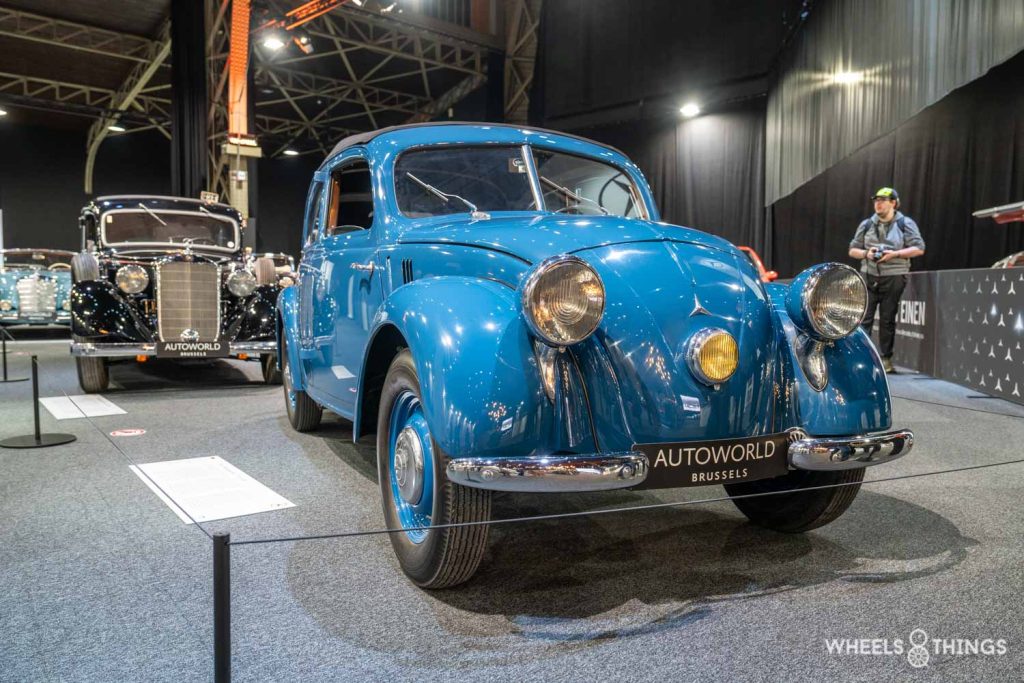
It’s not often that I see a car I’ve never seen before. This Mercedes-Benz 170 H is one of those cars. The 130 H was unveiled in 1935 as a car for the masses. With its rear-mounted engine, Mercedes-Benz followed the trend that prevailed among a group of ambitious car designers. The car was not particularly successful, and it was followed by a more powerful 170 H and also a 170 V. The letters H and V refer to the position of the engine. The H stands for Heckmotor, meaning rear engine, and the V stands for Vorne, meaning front engine.
1939 Mercedes-Benz 260 D Landaulet (W138)
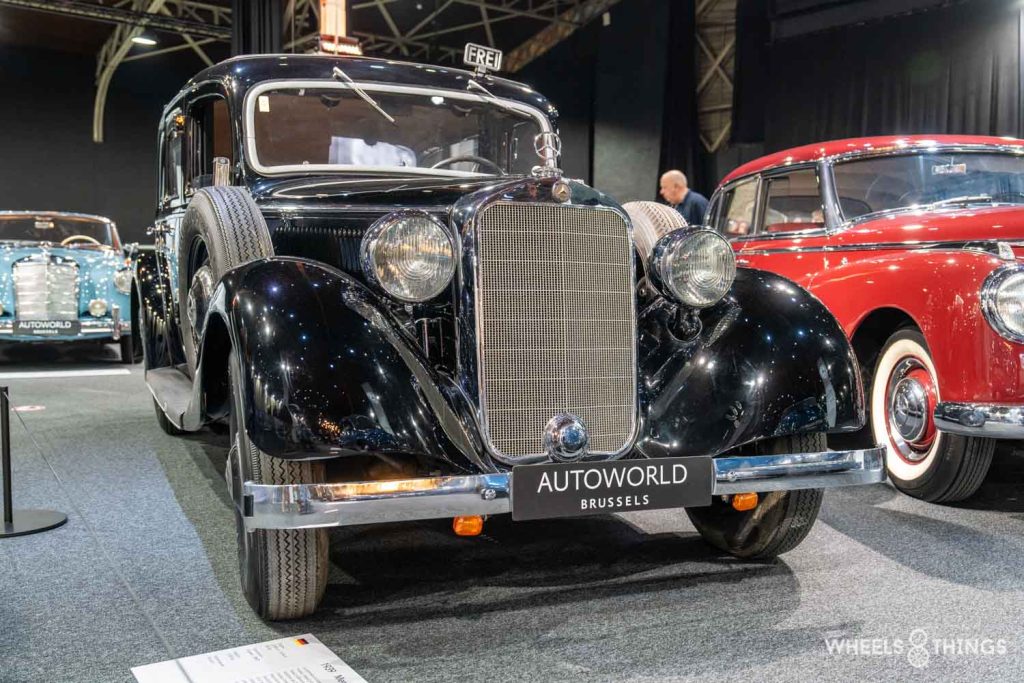
The taxi above is the first passenger car with a diesel engine to be built in series. The name 260D referred to the cylinder capacity, which was still clear at the time. A total of 170 Pullman landaulets were built on the W21 chassis. They were used exclusively as taxis and were already known for their fuel efficiency at the time. They consumed 9 L/100 km, which was only a fraction of the petrol variants.
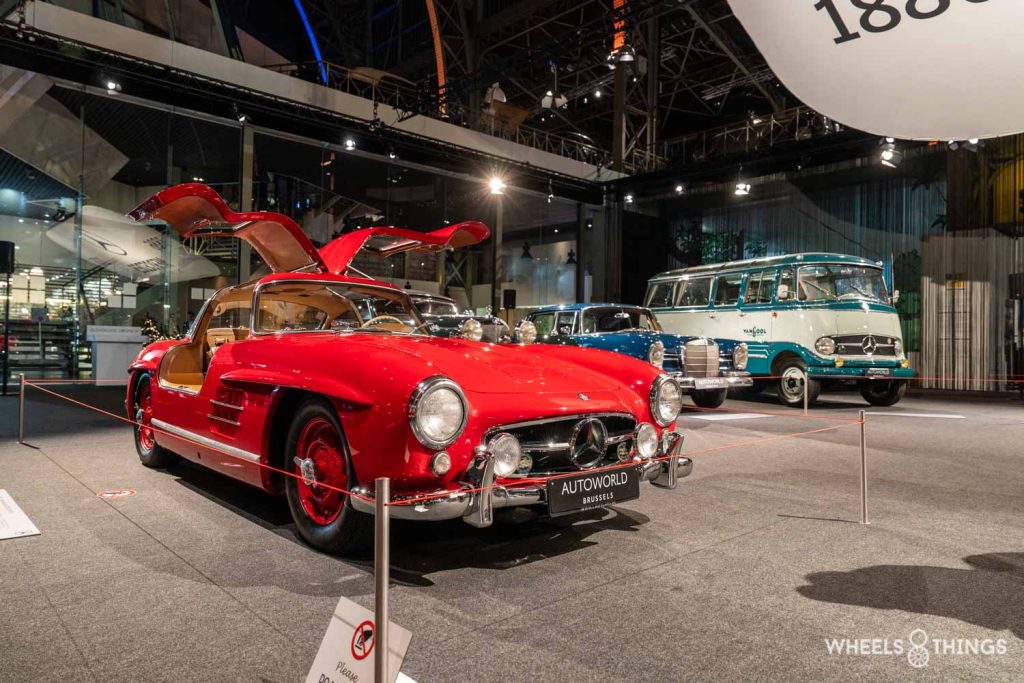
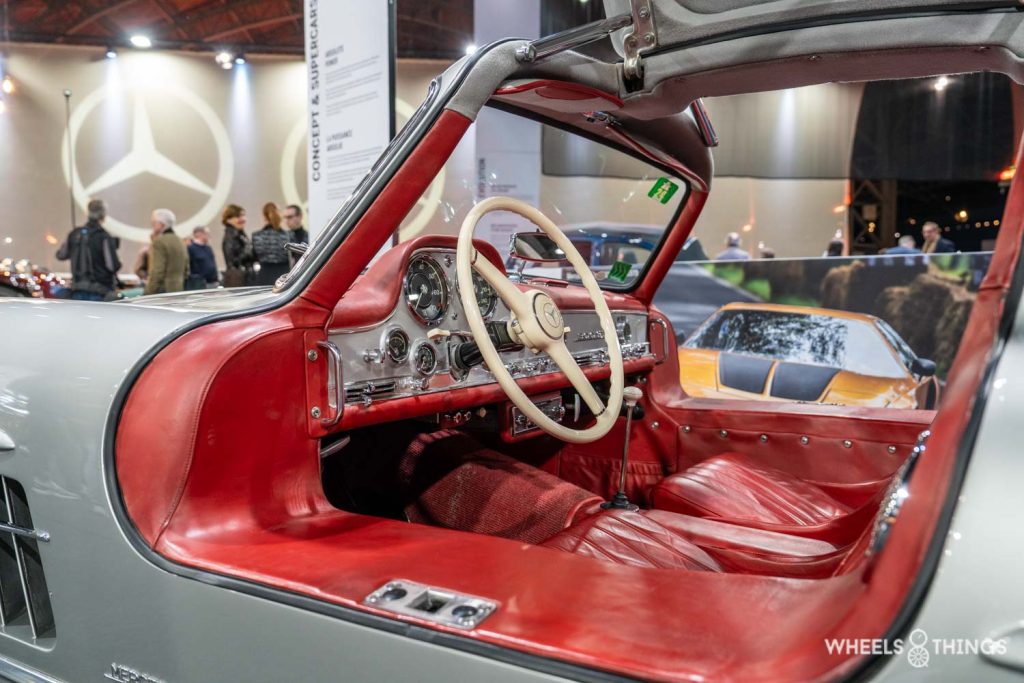
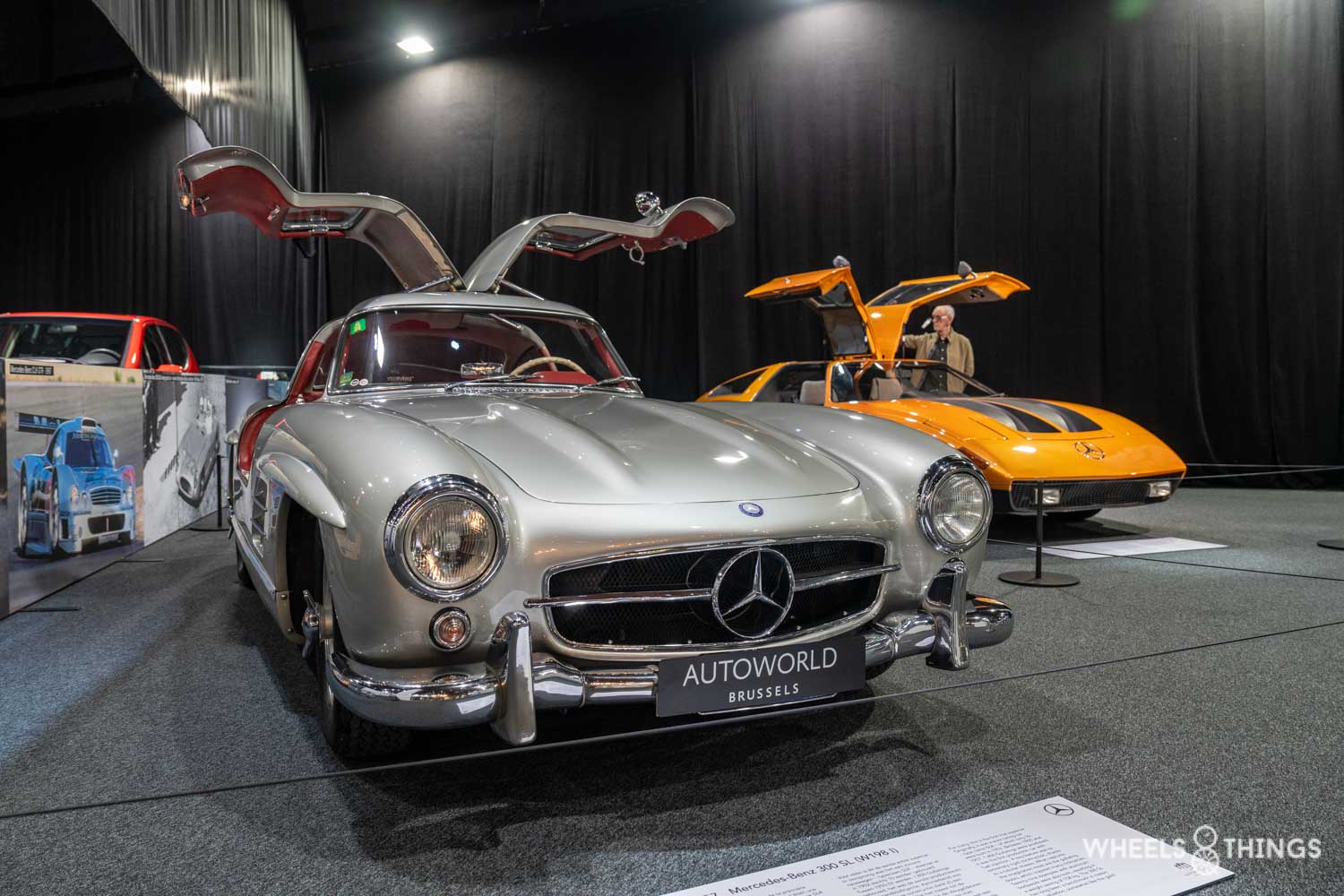
1957 Mercedes-Benz 300 SL (W198 I)
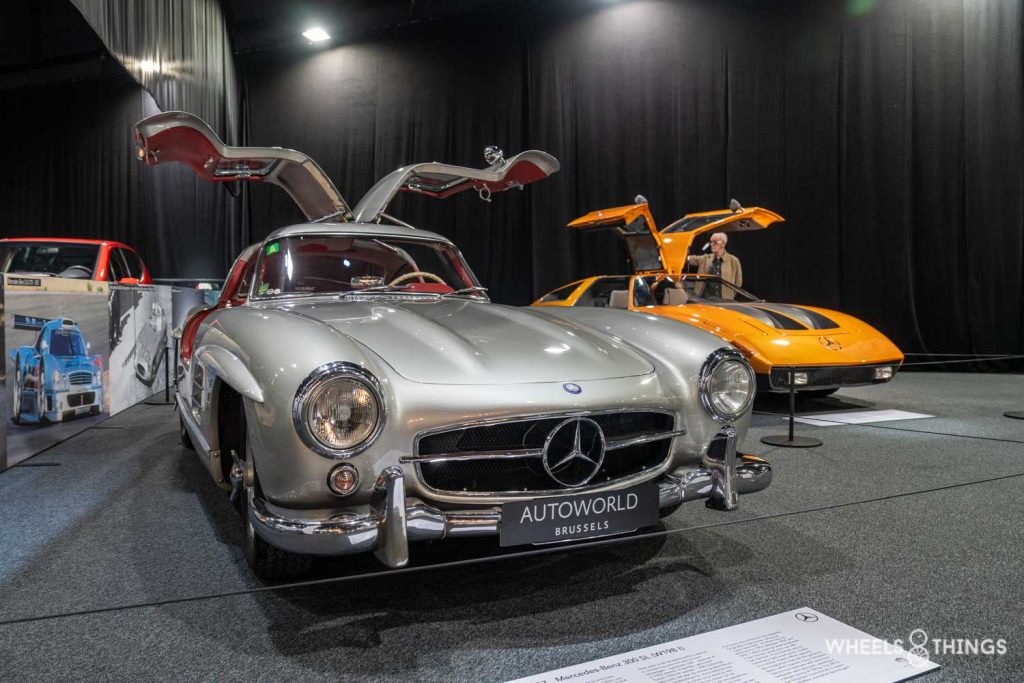
The Mercedes 300 SL is considered by many to be the first supercar. The car was originally a pure racing car with the type name SLR. Only ten were built in 1952. Between 1955 and 1957, 1,400 Gullwings were built. It was the first production car with fuel injection. The car owes its high body rigidity to the tubular chassis on which it is built. The most striking feature is, of course, its gullwing doors, which were designed more for practical reasons than as an eye-catcher.
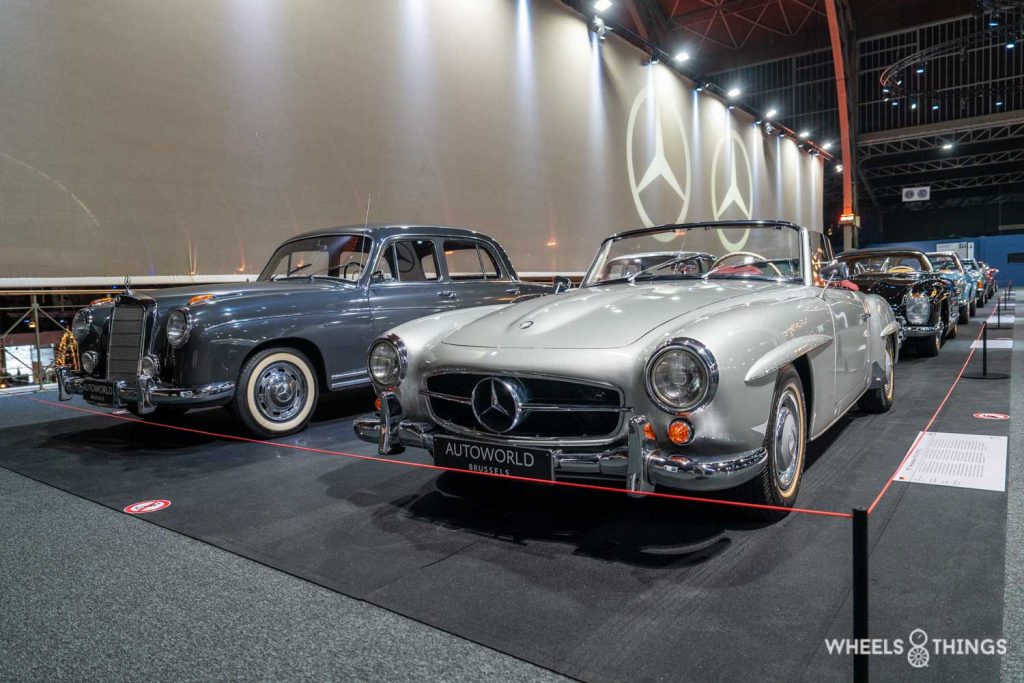
1957 Mercedes-Benz 190 SL (W121 B2)
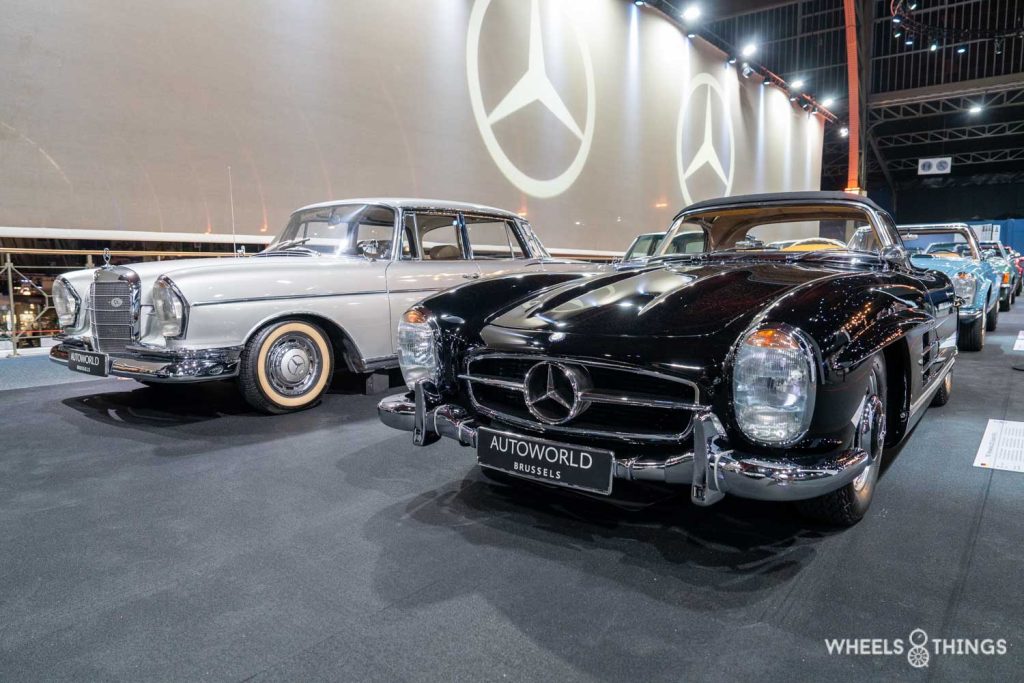
The Mercedes-Benz 190 SL is sometimes referred to as the baby SL. It was intended to offer a cheaper alternative to the 300 SL. A total of 25,881 units were built between 1955 and 1963. The 190 SL is technically based in part on the open version of the 180 Ponto saloon. The car had to make do with a rather meagre 1.9-litre four-cylinder in-line engine that delivered 105 hp. The car has beautiful lines, but the engine is somewhat underpowered. It is a much sought-after model with a hefty price tag.
1964 Mercedes-Benz 0 319 Bus
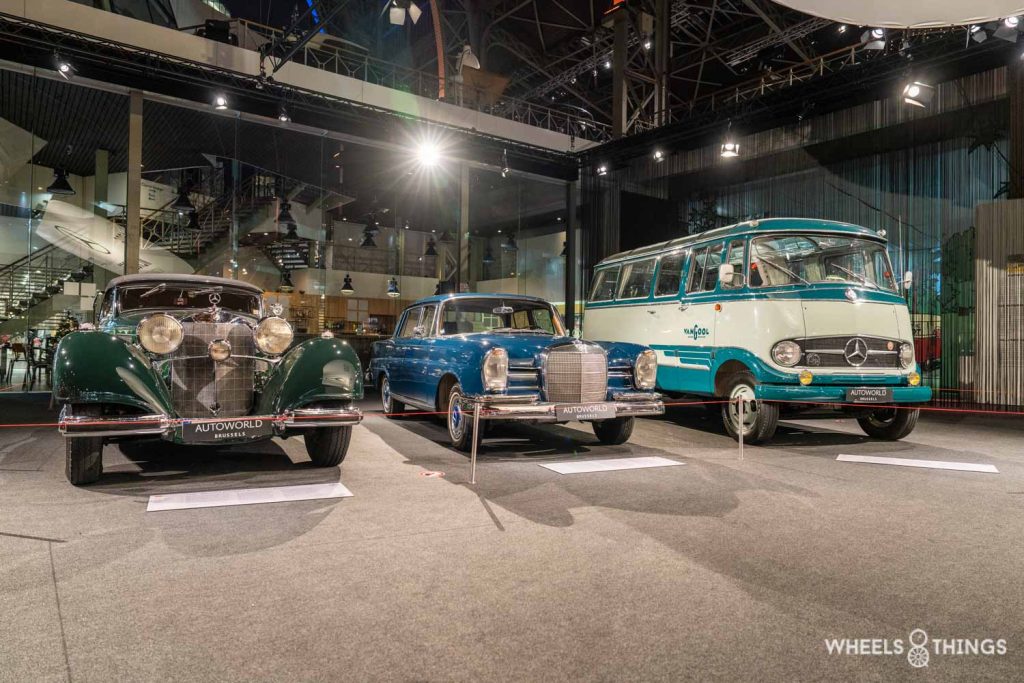
Mercedes-Benz is one of the few car brands that is present in all markets. Passenger cars, vans, lorries and buses. Above right you can see what was then the smallest bus in the range. This bus was actually based on their van. It was available with both a petrol and a diesel engine and had 10 to 17 seats.
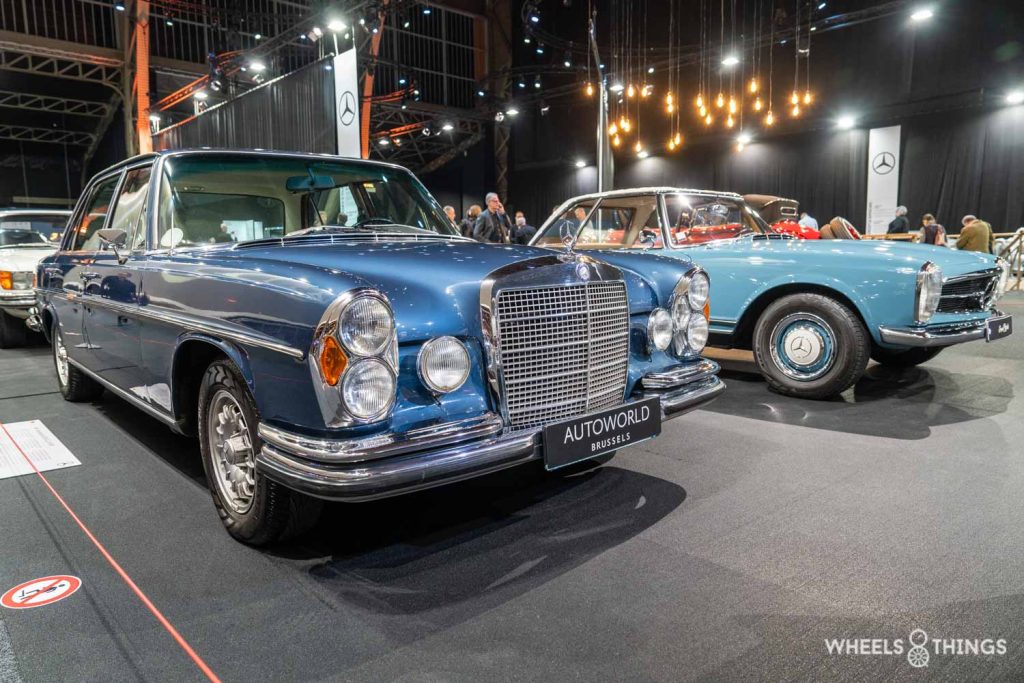
1965 Mercedes-Benz 230 SL
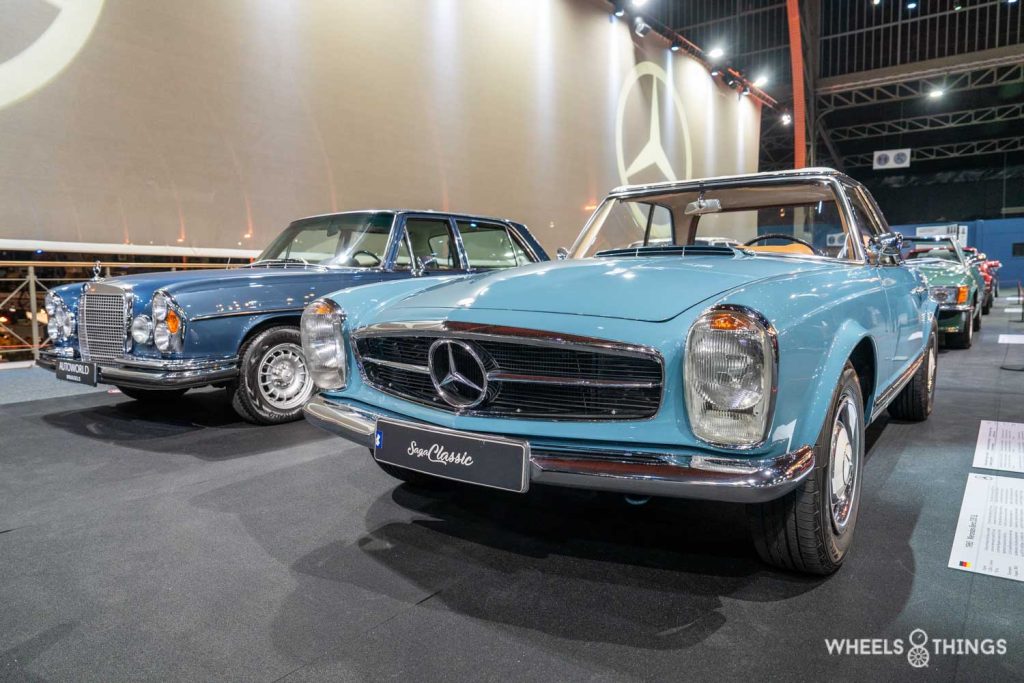
The model shown above had the internal designation W113 and was designed by Frenchman Paul Bracq. The car was nicknamed Pagoda because of the slightly concave shape of the hardtop. It was the first sports car with crumple zones. This had previously been introduced on the W110 “Heckflosse”. The Pagoda was in production from 1963 to 1971, and a total of 48,912 units were built.
1969 Mercedes-Benz 600 Pullman (R100)
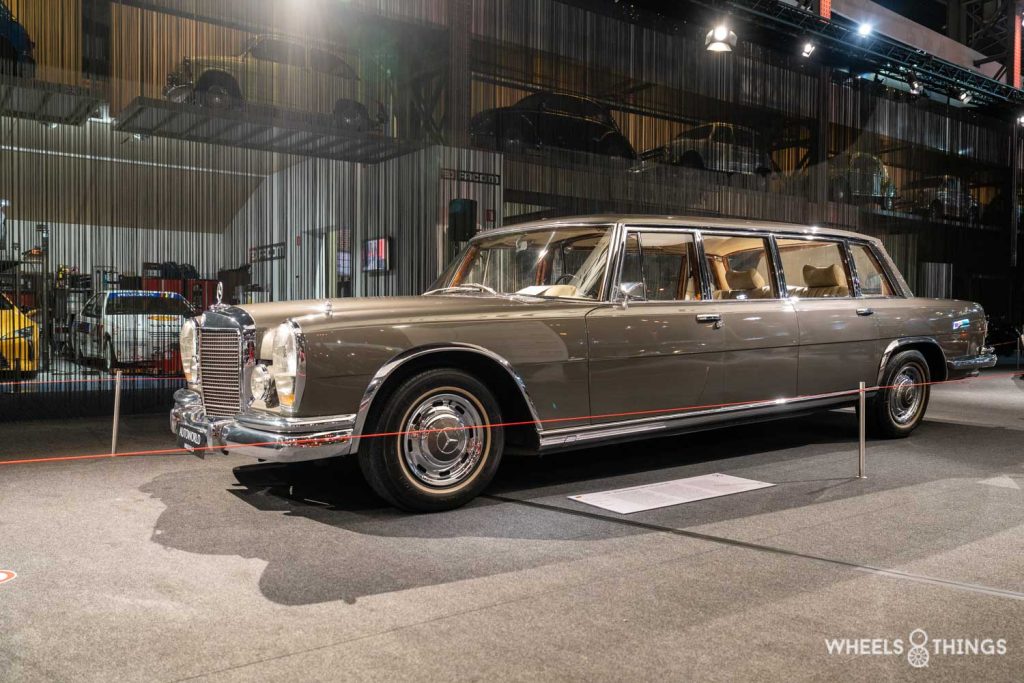
The Mercedes-Benz 600 Pullman was quite a sight, because with a length of 6.24 metres, you don’t go unnoticed. Between 1964 and 1981, 487 Pullmans were built, almost all of them custom-made. Despite its impressive dimensions, its weight was limited to 1650 kg. Thanks to its V8 engine with a cylinder capacity of 6332 cc, it was a fast car for its time. The model above served the Belgian Royal Court and is known by its nickname “King Baudouin”.
1970 Mercedes-Benz C 111-II Experimental Vehicle
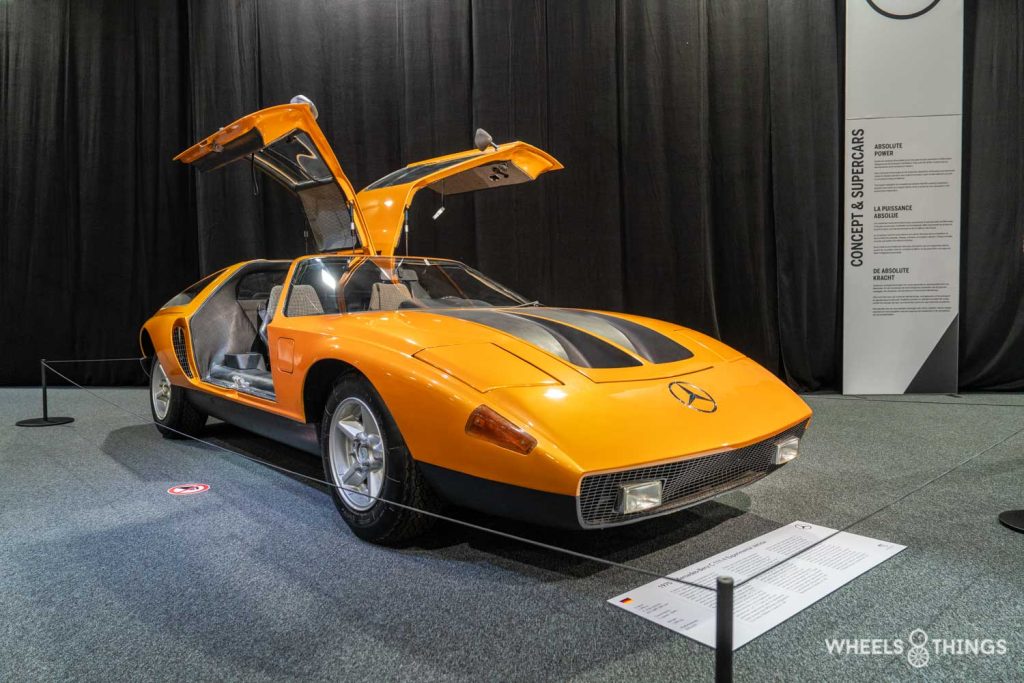
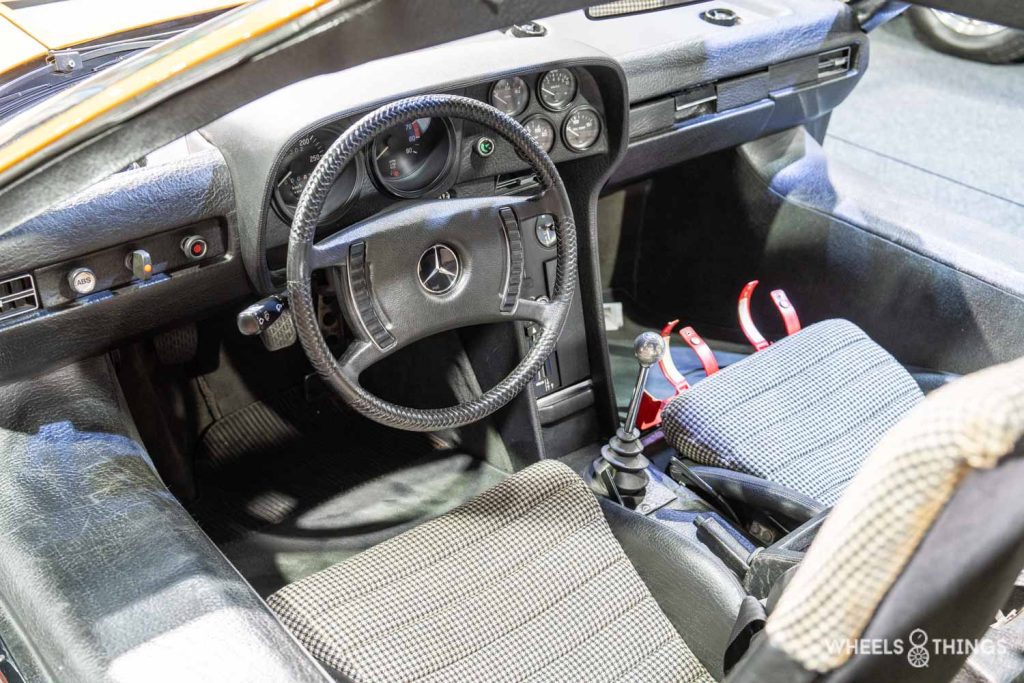
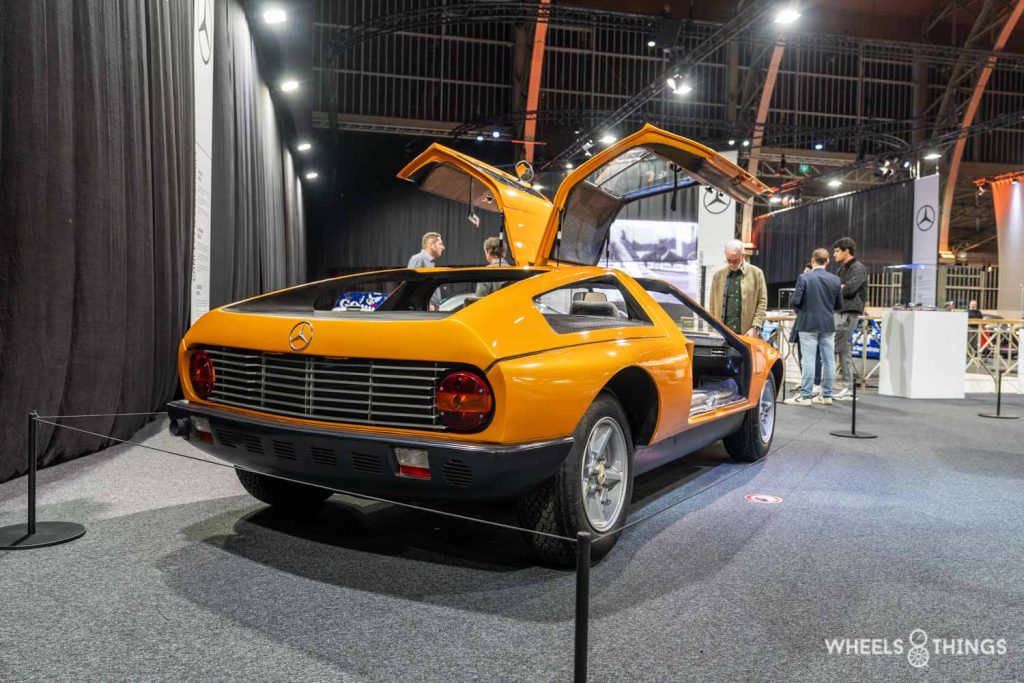
Barely six months after the presentation of this car, Mercedes-Benz unveiled a thoroughly revised version with a Wankel engine at the Geneva Motor Show in 1970. Thanks to this engine, the C111-II had even better performance and reached a top speed of 300 km/h. Despite its beautiful lines and the high level of interest it attracted at the Geneva Motor Show, the C111-II did not go into production. The Wankel engine project was also discontinued at that time. A total of 16 units were produced with three different engine types.
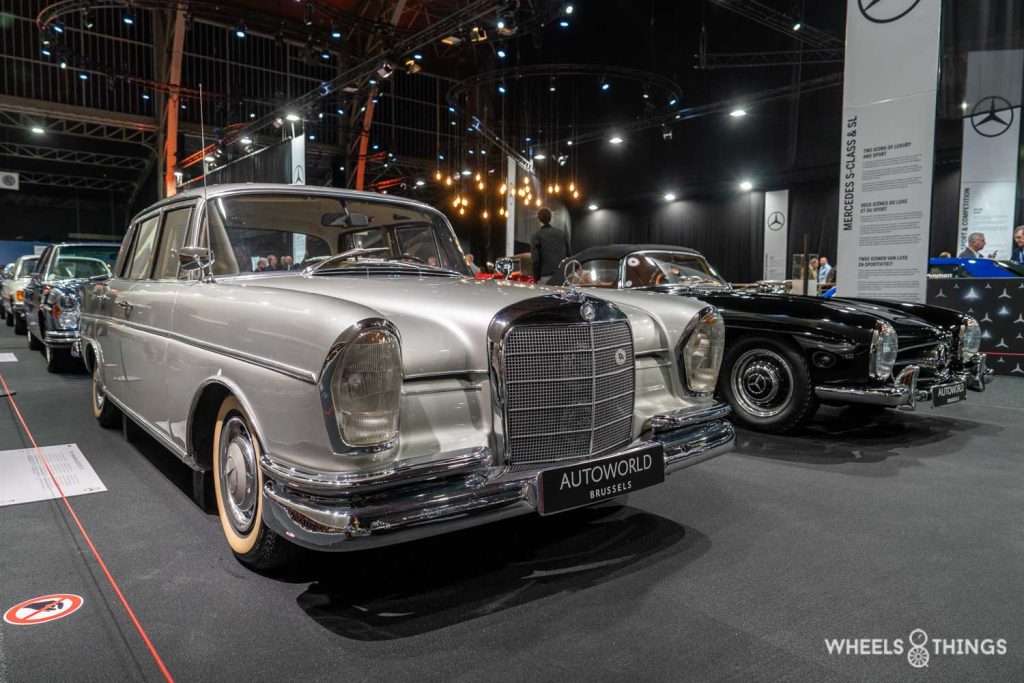
1971 Mercedes-Benz 300 SEL 6.9 AMG “Rote Sau” (W108)
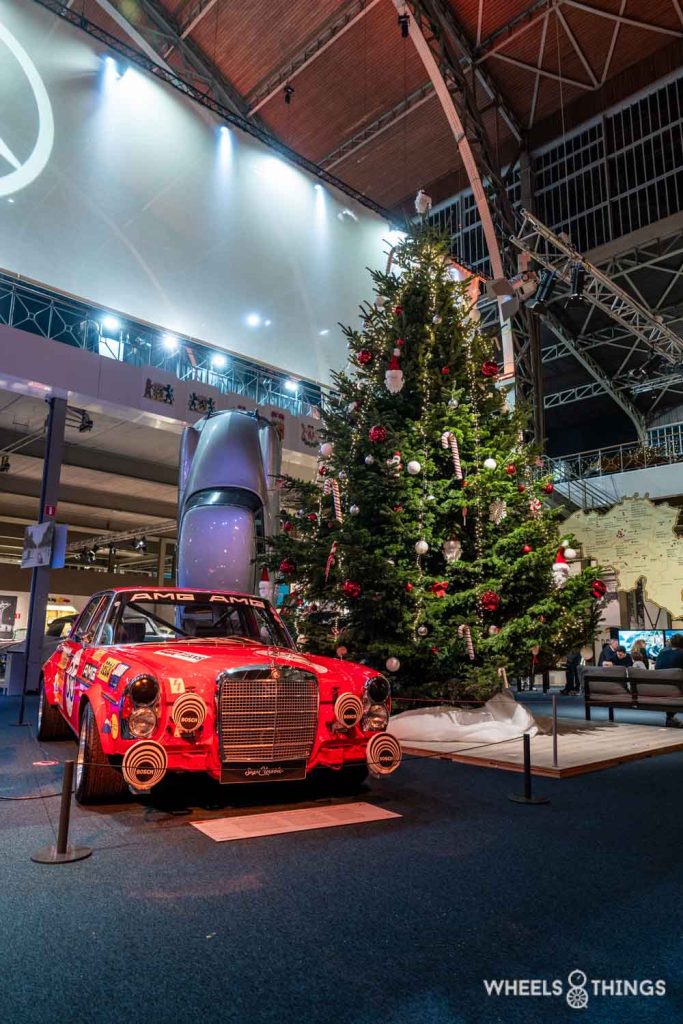
It’s under the Christmas tree, but this car is special enough to mention. It is a 300 SEL 6.3 tuned by AMG, which was still very small at the time. It was already one of the fastest four-door cars of its time, but thanks to the modifications, this car took second place in the 1971 24 Hours of Spa. This put AMG firmly on the map. The original car no longer exists, so this is a replica.
1980 Mercedes-Benz 280 E (W123)
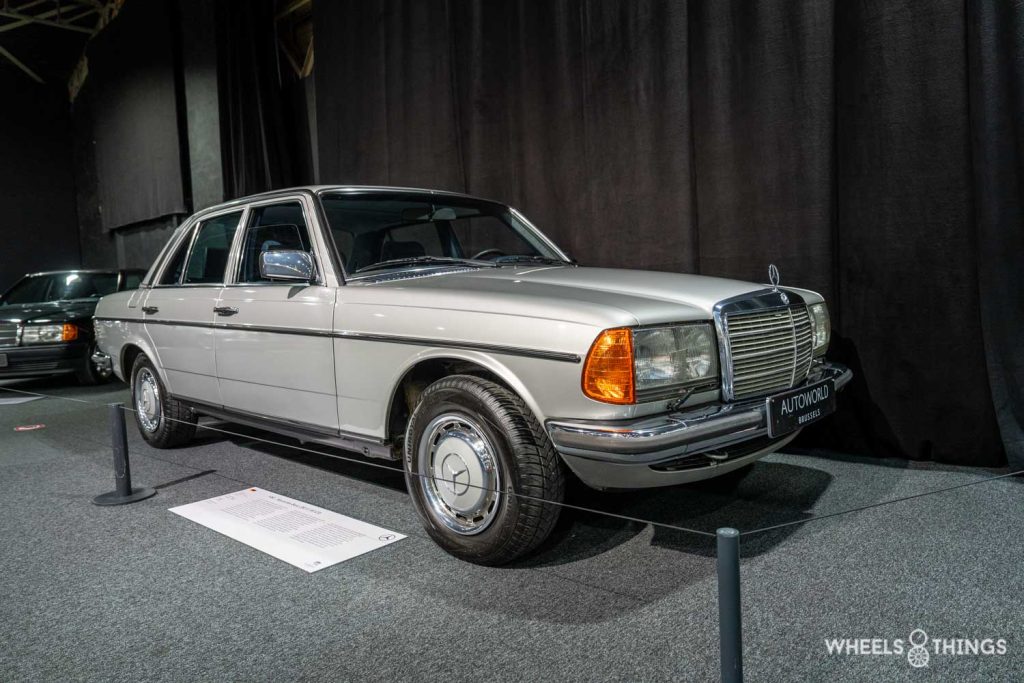
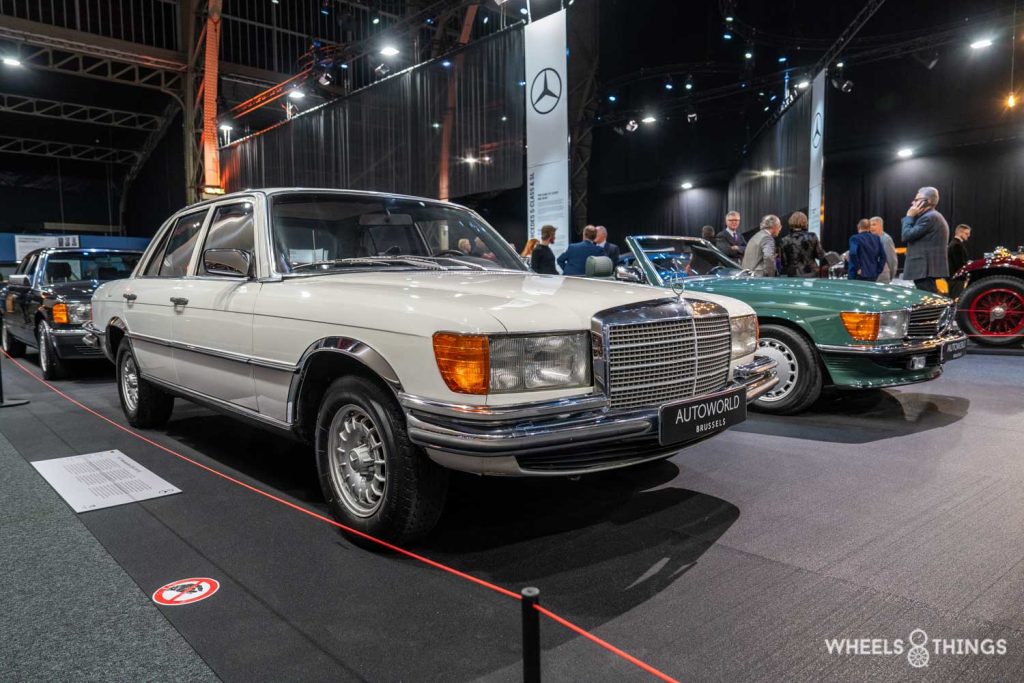
The W123 is the most widely produced Mercedes ever. It was the car for the upper middle class and is actually the predecessor of the E-Class, which was introduced later. The car was a model of safety, but was also technically advanced. For example, this version was the first Mercedes to have a turbo diesel engine. Due to its popularity, waiting times for orders ran to more than a year.
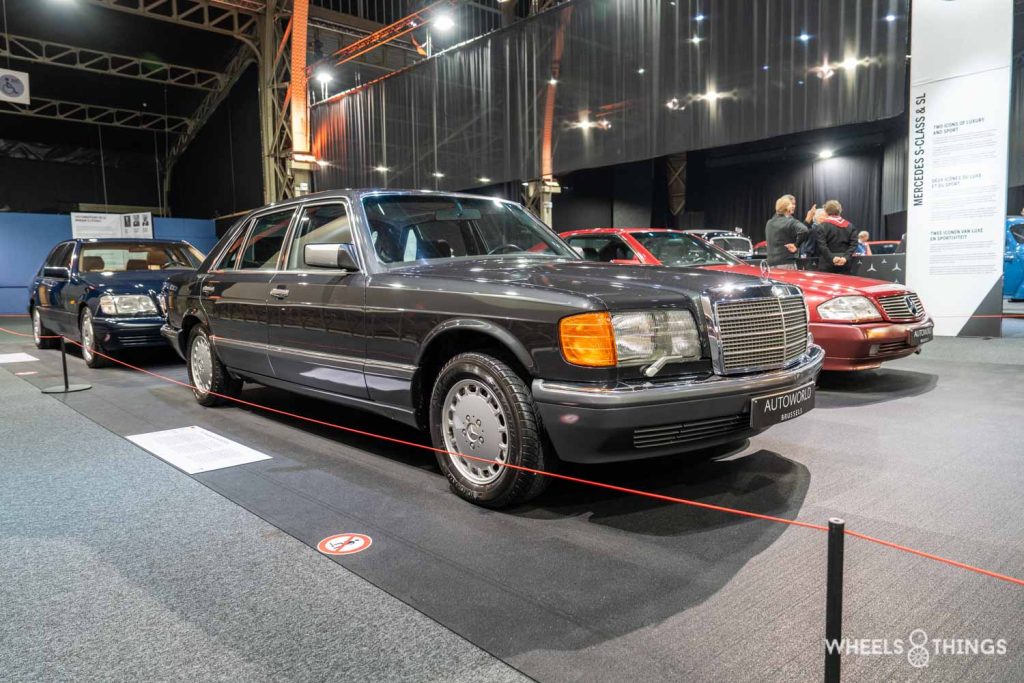
1989 Mercedes-Benz 560 SEC (C126)
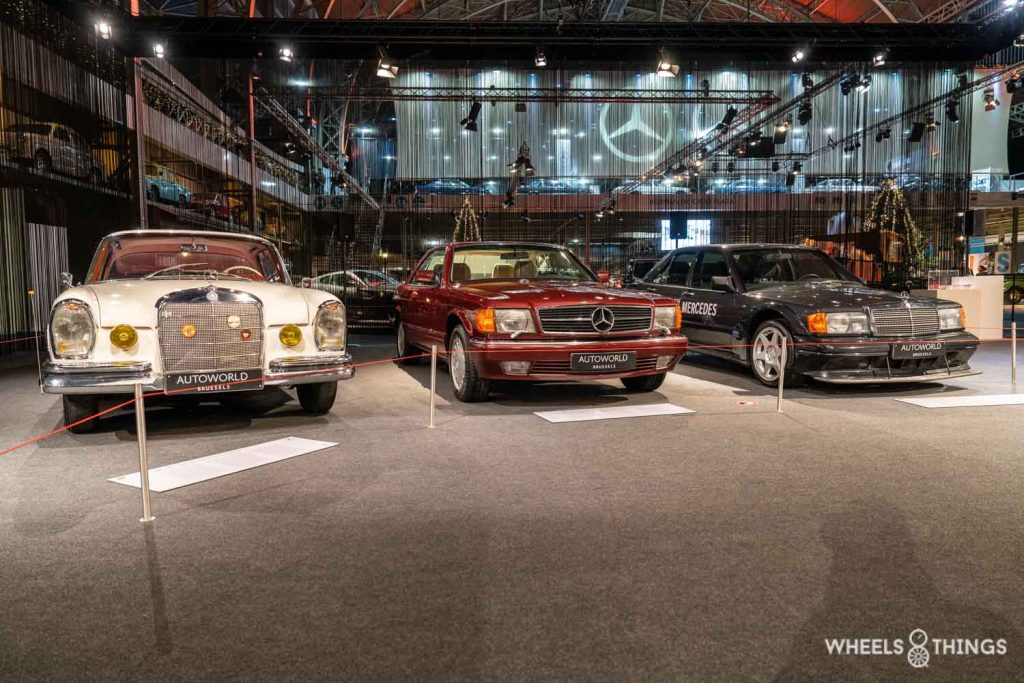
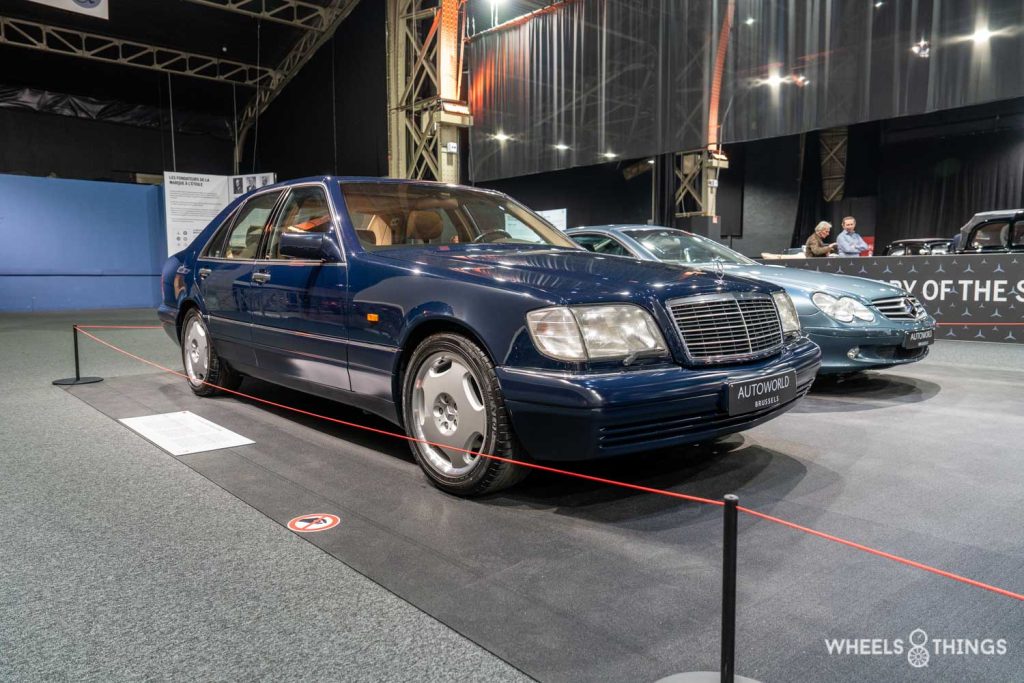
The Mercedes-Benz 560 SEC (centre in the photo) is the coupé version of the W126. A great deal of attention was paid to aerodynamics in the design of this coupé. Its drag coefficient was 0.34, which was very favourable for that time. The coupé was unveiled at the Frankfurt Motor Show in 1982. The 560 shown above was available from 1985 and was the most powerful model with 300 hp. At that time, the S-Class was among the very best available on the car market. The price was commensurate, as it was even more expensive than a Ferrari Testarossa.
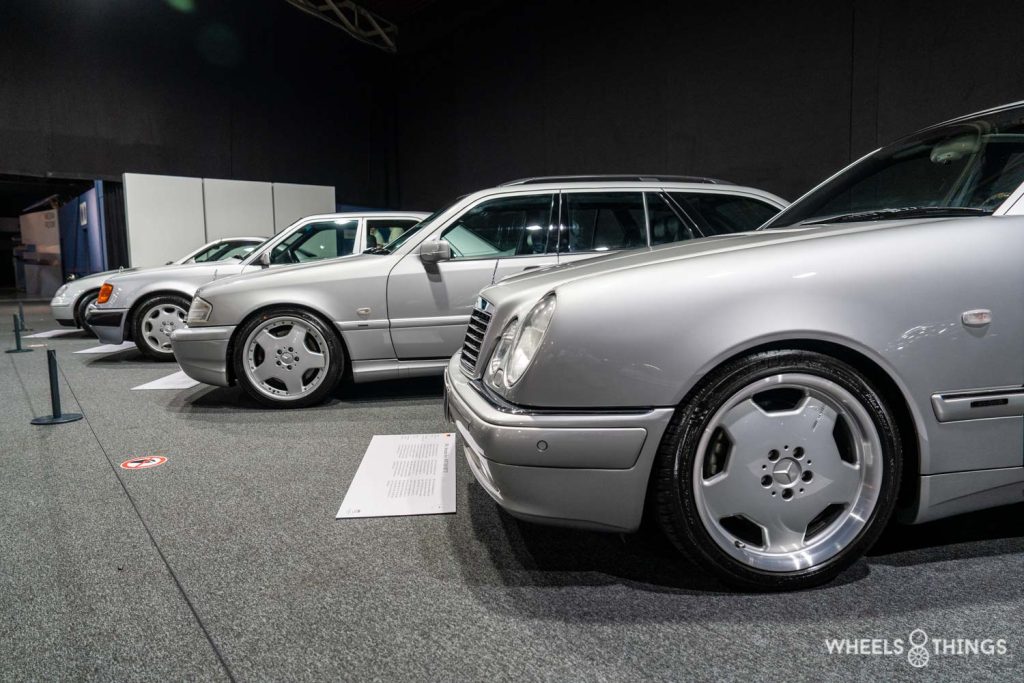
1992 Mercedes-Benz 500 E (W124)
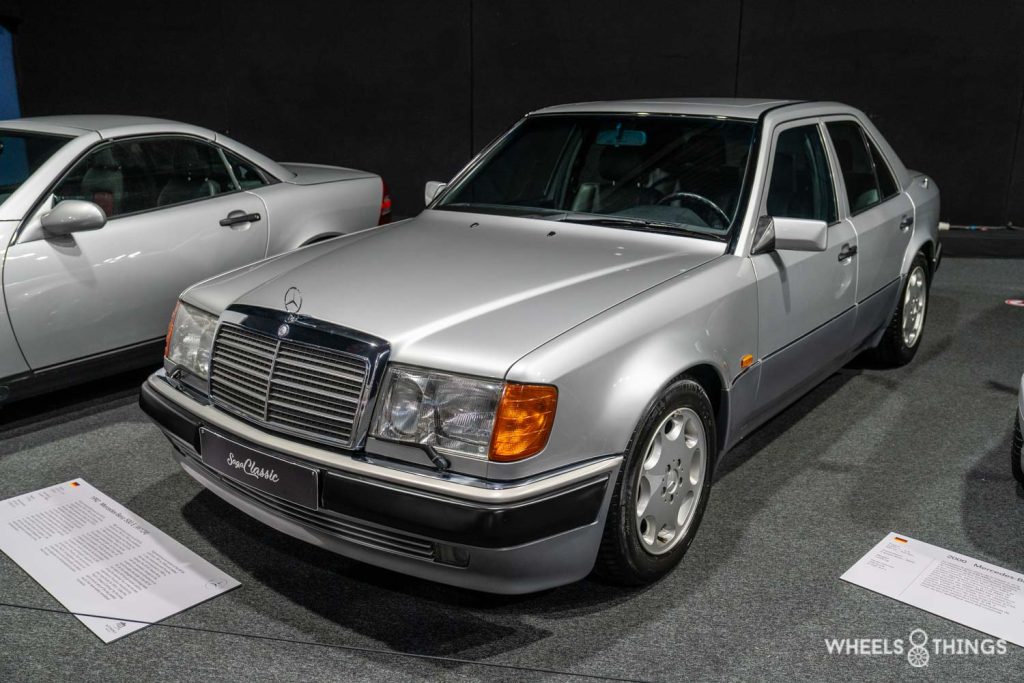
The car above could be described as an old-fashioned E series. But make no mistake, because this W124 was developed in collaboration with Porsche. In 1989, Porsche was commissioned to redesign the W124 chassis. Modifications were made to the chassis and drivetrain with the aim of using the 5-litre V8. The figures speak for themselves: the 4973 cc V8 produced 326 hp and took the car to 100 km/h in just 6 seconds. The top speed was limited to 251 km/h.
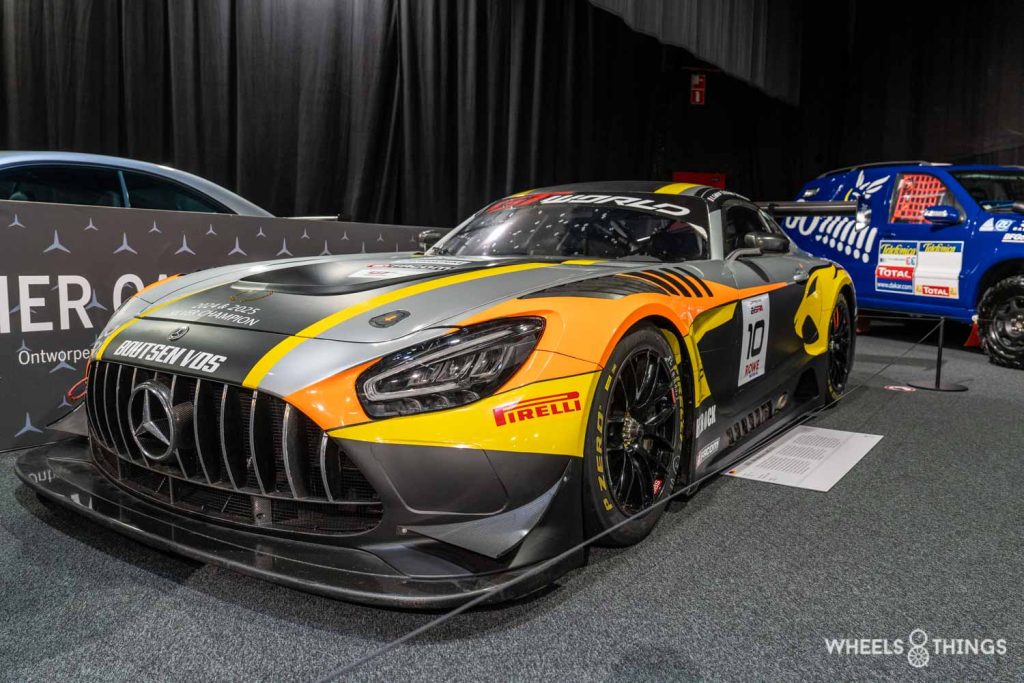
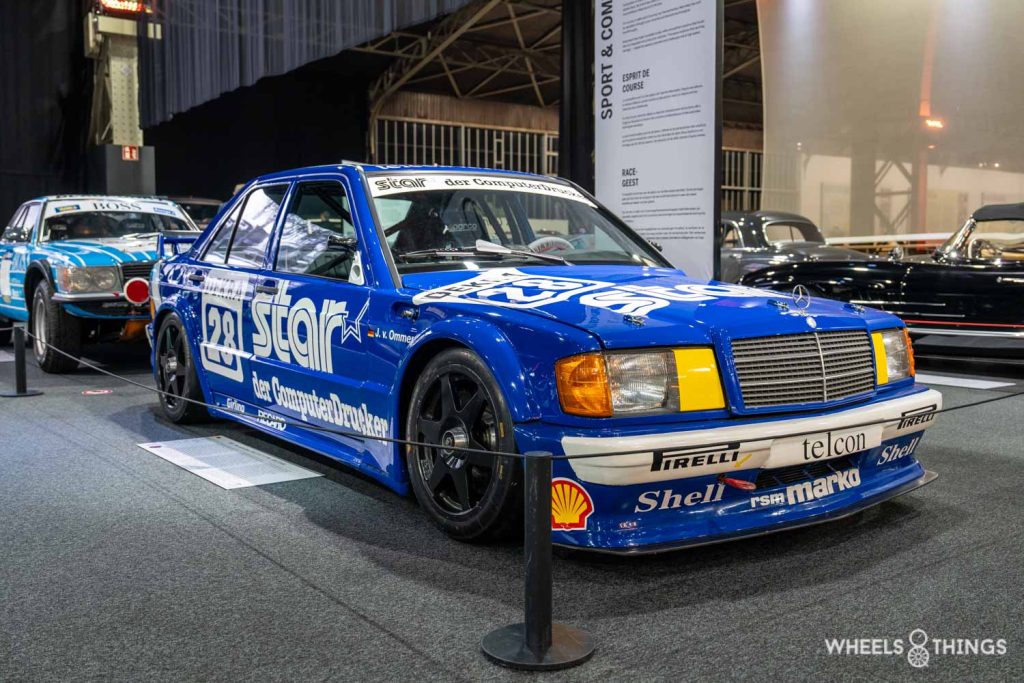
Mercedes-Benz sports department
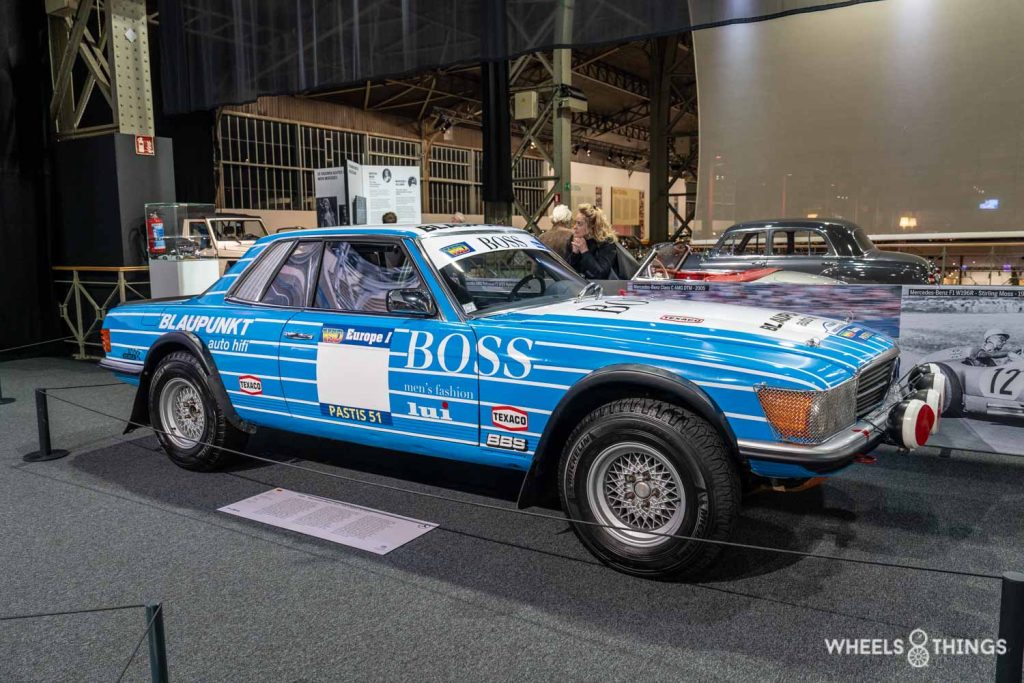
Mercedes-Benz has been closely involved in motorsport since the 1930s. Earlier in this report, we mentioned the “Silberpfeile”. We now take a leap forward in time with this 1984 SLC 500 Dakar. As early as 1980, Mercedes prepared six 450 SLCs for the rally championship. After a few successes in African rallies, such as a 1-2 finish in the Bandama Rally, the team was disbanded, partly due to the arrival of the Group B cars, which they were unable to compete with. Two of the cars went to Martin Frey’s German team, who had them prepared for the Dakar Rally. However, they did not achieve any major successes.
1988 Sauber-Mercedes C9 – Group C Racing Car
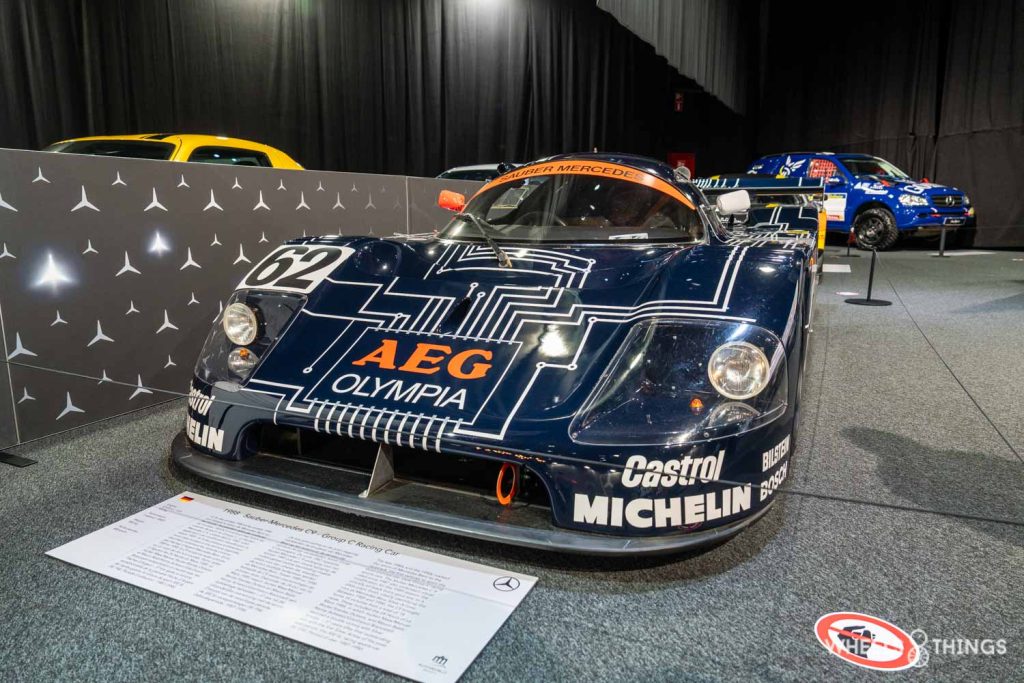
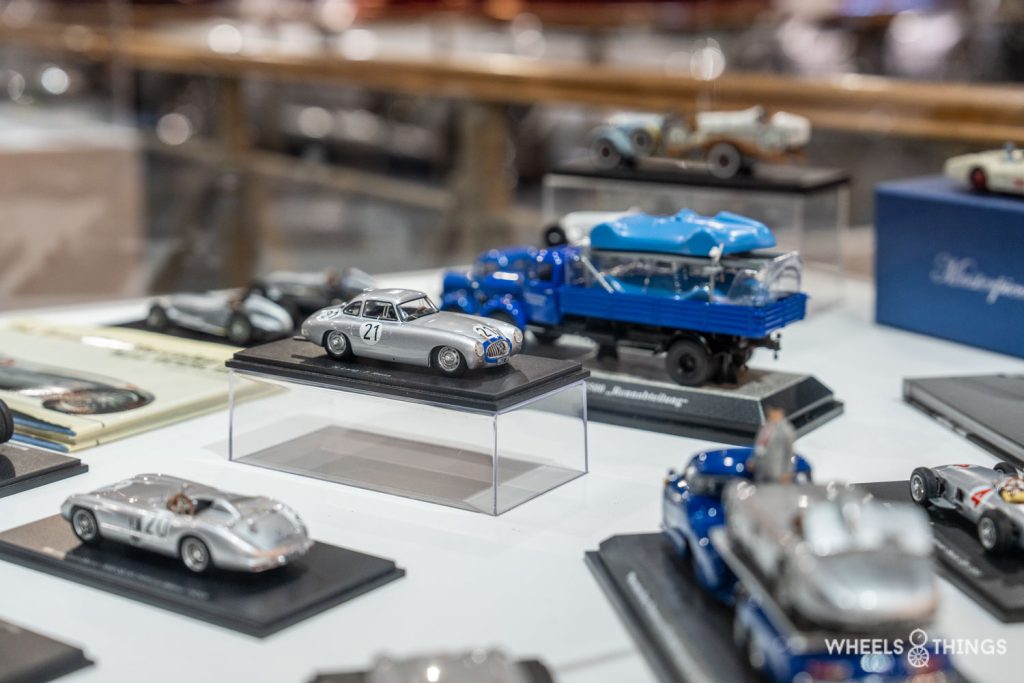
In the late 1980s, Mercedes-Benz returned to the racing circuit. The first cars were Group C racing cars. The C9 you see above was given a new colour in 1989, with the almost black being replaced by silver. This was a link to the earlier Silver Arrows and clearly recognisable on the circuit. Between 1989 and 1990, the C9 achieved no fewer than sixteen victories in eighteen races. The 24 Hours of Le Mans was also won in 1989 with Jochen Mass/Manuel Reuter/Stanley Dickens and Mauro Baldi/Kenny Acheson/Gianfranco Brancatelli, achieving a double victory. It was then 37 years after the victory with the first Silver Arrow of the post-war period, the 300 SL racing car.
2000 Mercedes-Benz ML 430 (W163)
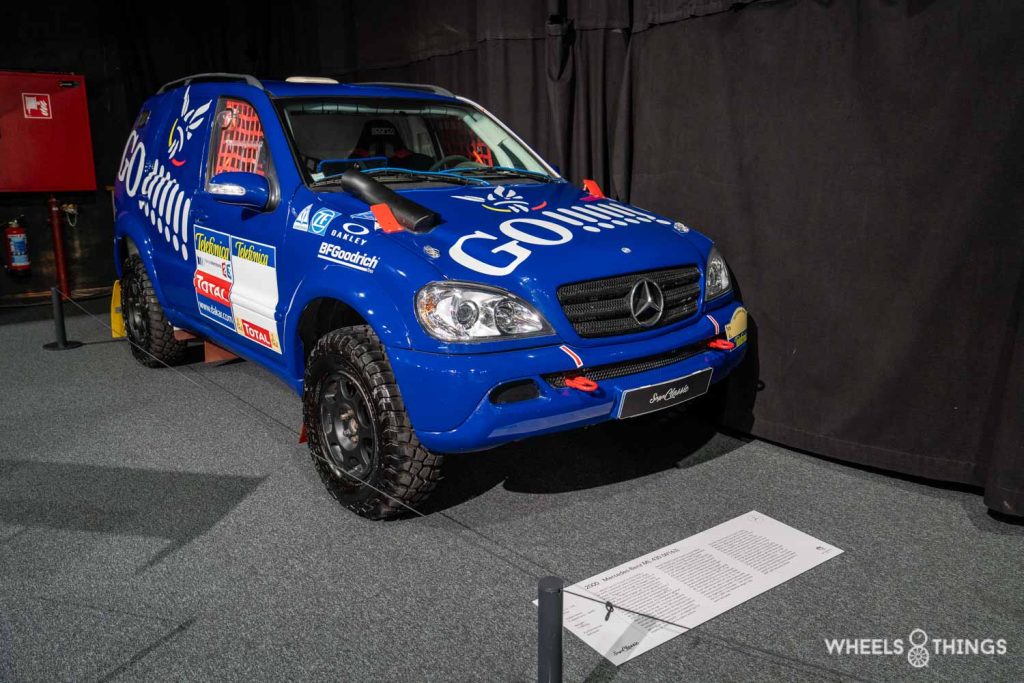
This ML 430 was entered by the Groine Développement Compétition team in the T1 group for production cross-country vehicles. The aim was to participate in long-distance rallies in France, Tunisia, Morocco, Egypt, Portugal, Spain, Italy, Russia, Argentina and the United Arab Emirates. In the FIA World Cup Championship, ML 430 driver Jean-Pierre Strugo finished fifth in a field of more than 100 drivers. He finished first in his own class, a feat he repeated in 2001.
2009 Mercedes-Benz SLR McLaren “Stirling Moss” (R199)
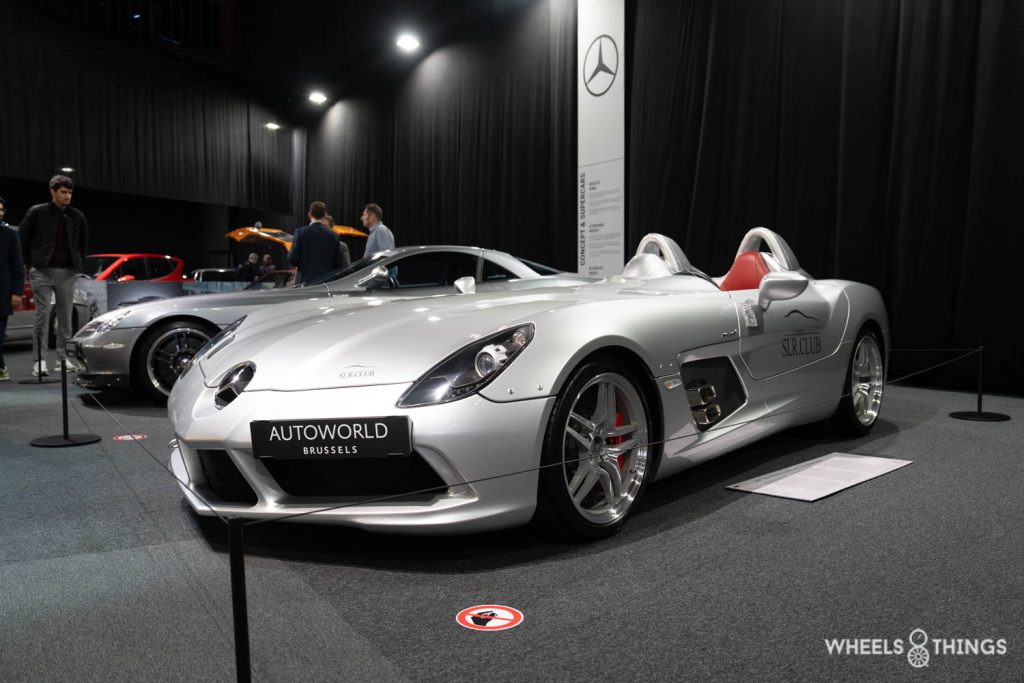
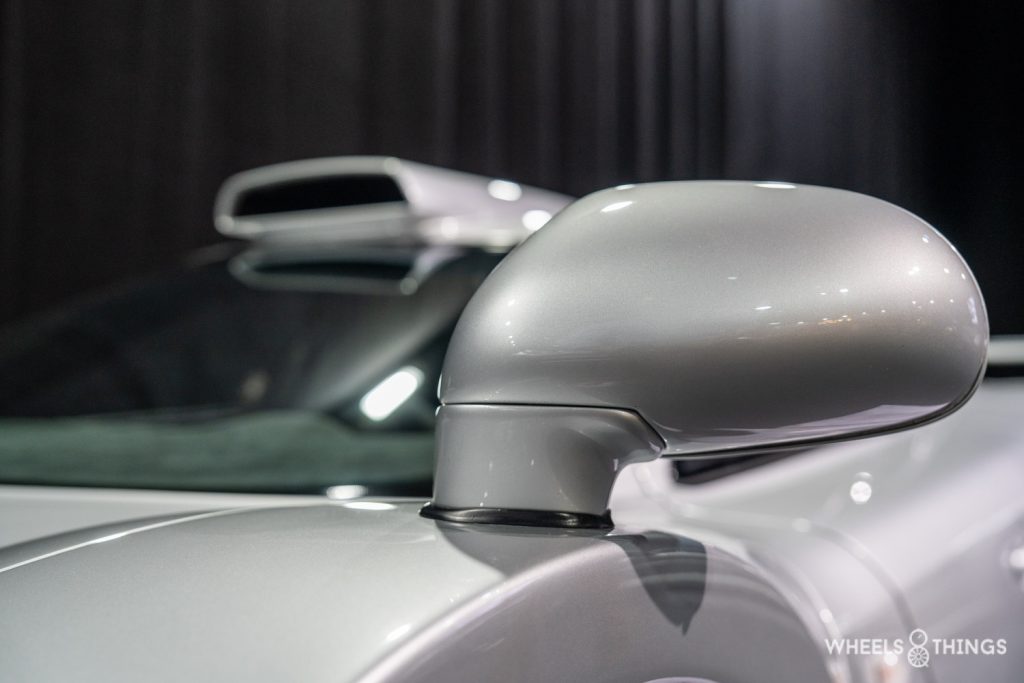
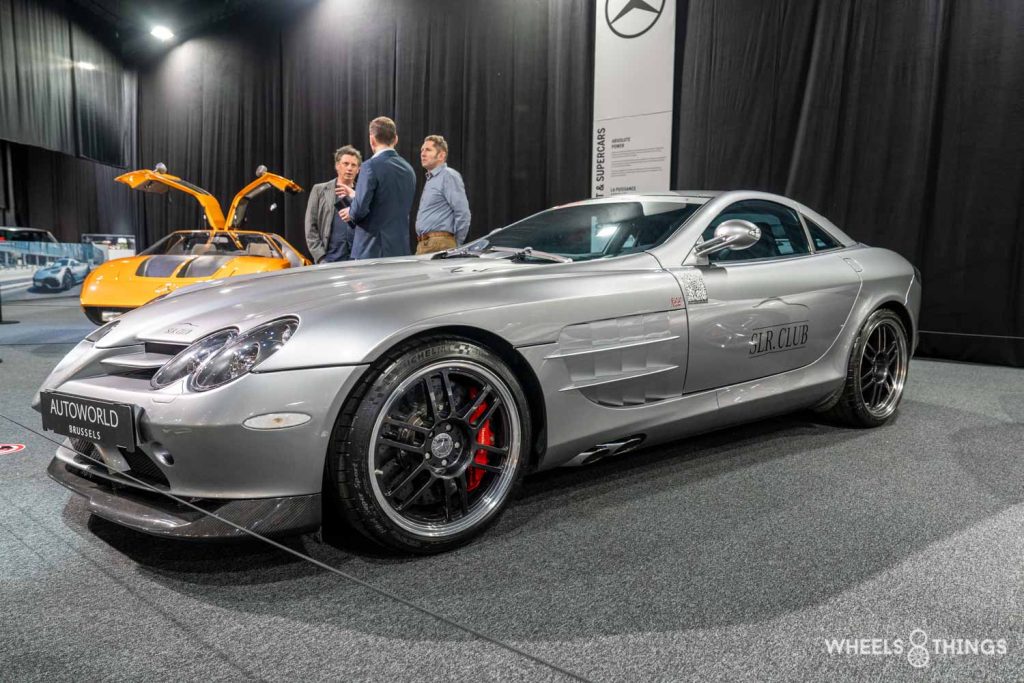
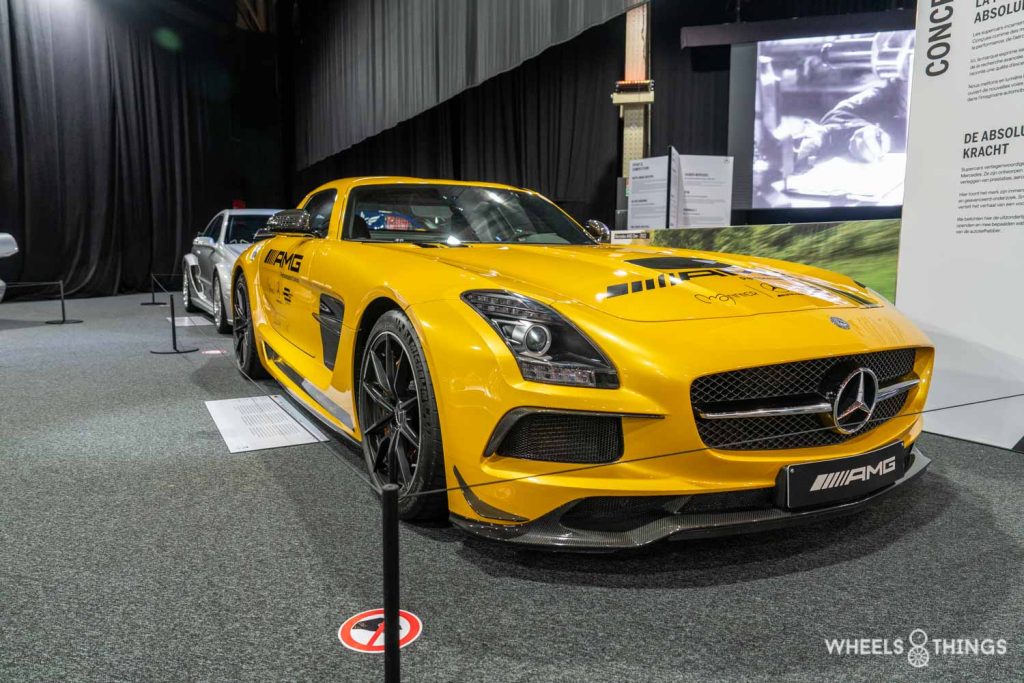
When McLaren and Mercedes collaborate, you know it’s going to be spectacular. This joint development dates back to the period when they were very successful together. The SLR shown above is a special, limited edition model. The car was designed by Korean designer Yoon Il-Hun and is inspired by the 300 SLR racing car. The SLR Stirling Moss was intended to be the last series of McLaren SLRs to be built. Thanks to its carbon fibre construction and speedster design, the car is approximately 200 kg lighter than the regular model. Only 75 were built and they are exclusively available to existing SLR owners. Each one cost more than $1 million. The model shown above was driven and signed by Stirling Moss himself in Goodwood in 2009.
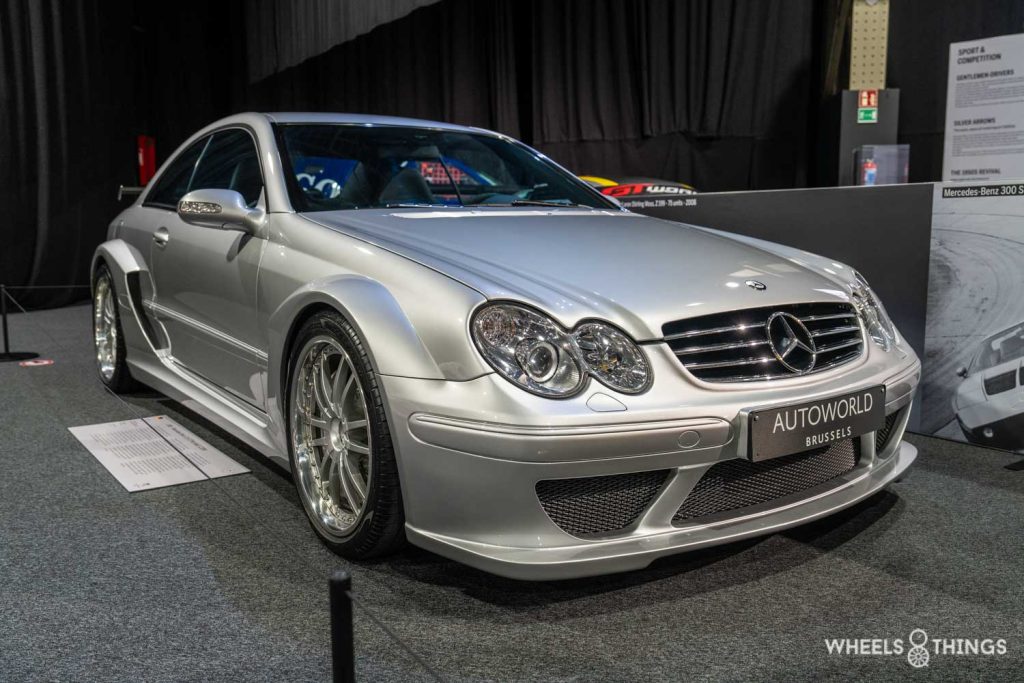
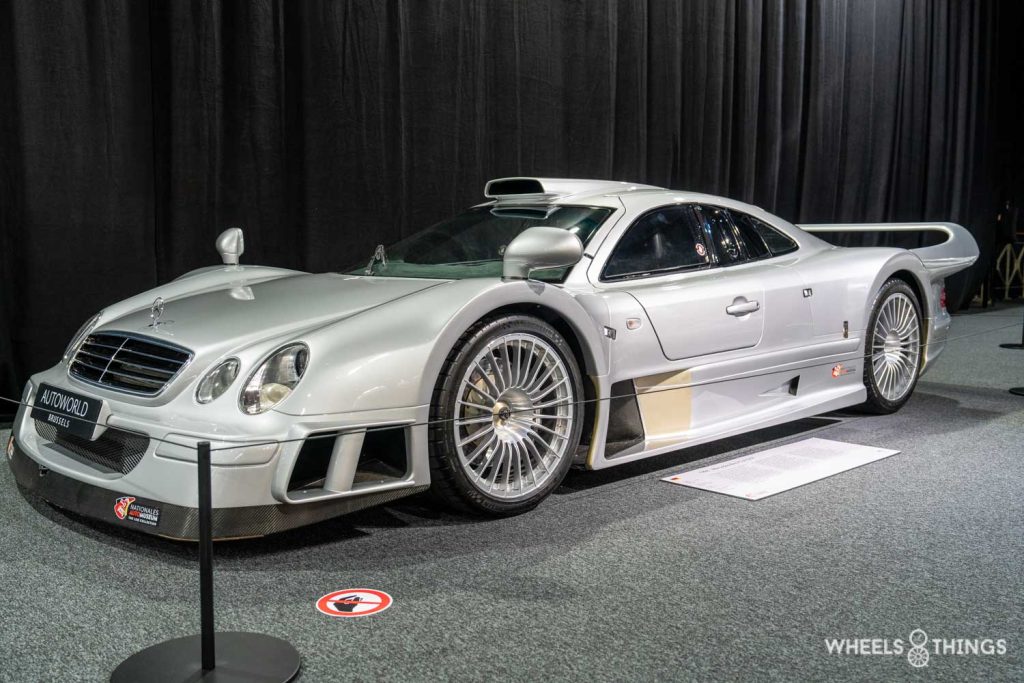
2005 Mercedes-Benz CLK DTM AMG (C209)
One of the most evocative Mercedes models is perhaps this CLK DTM AMG. The design and styling of the CLK is derived from the E-Class, although most of the components are from the smaller C-Class. The Mercedes-Benz CLK DTM AMG is a limited edition high-performance coupé based on the CLK that won the DTM in 2003. Much of the bodywork is made of carbon fibre. The power source is a 5.4-litre V8 with AMG supercharger that delivers no less than 582 hp. Only 100 coupés were built for the European market in 2004. In 2006, another 80 convertibles were produced.
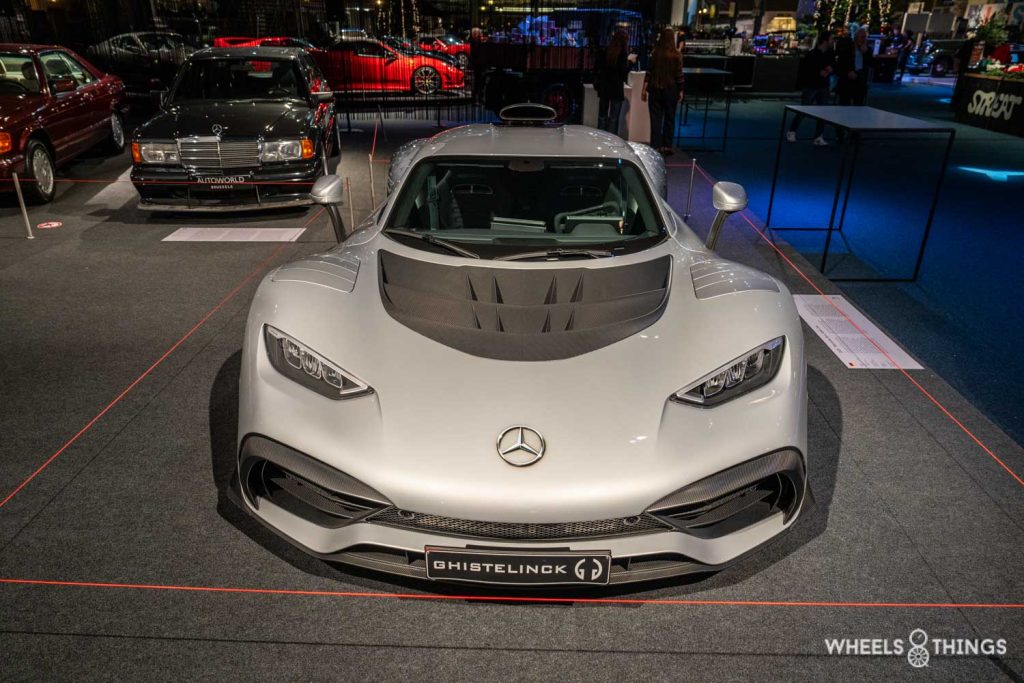
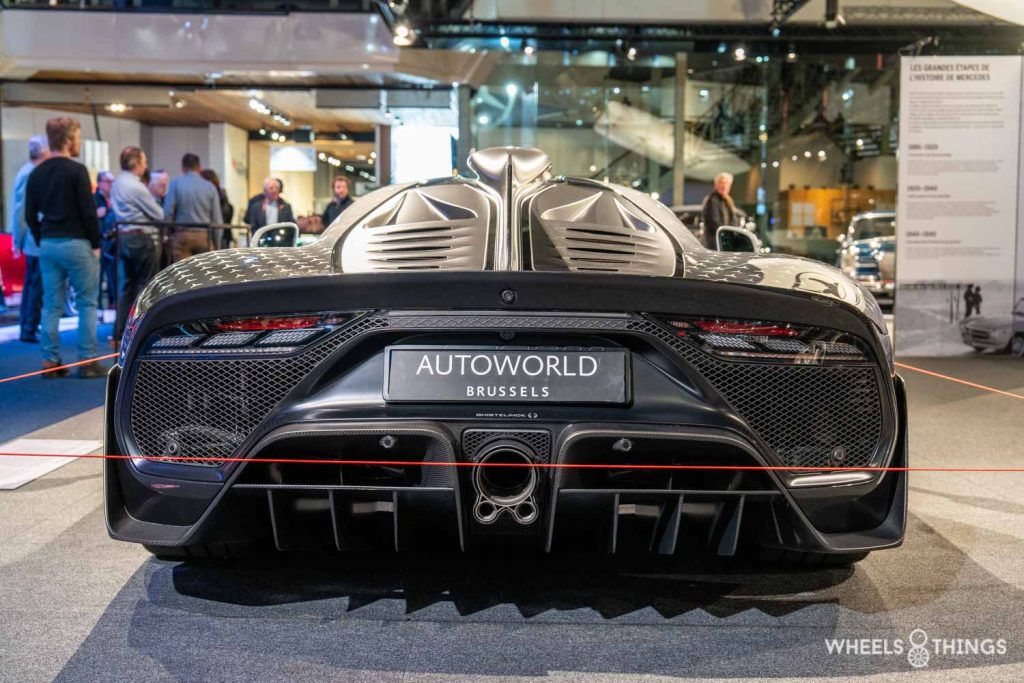
2025 Mercedes-Benz AMG One
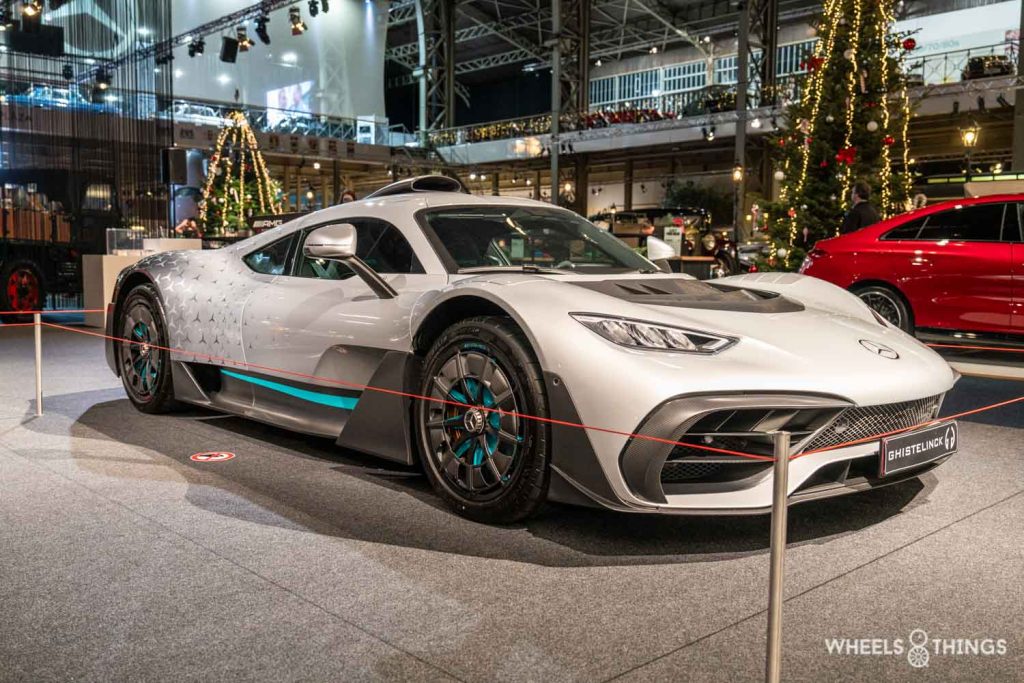
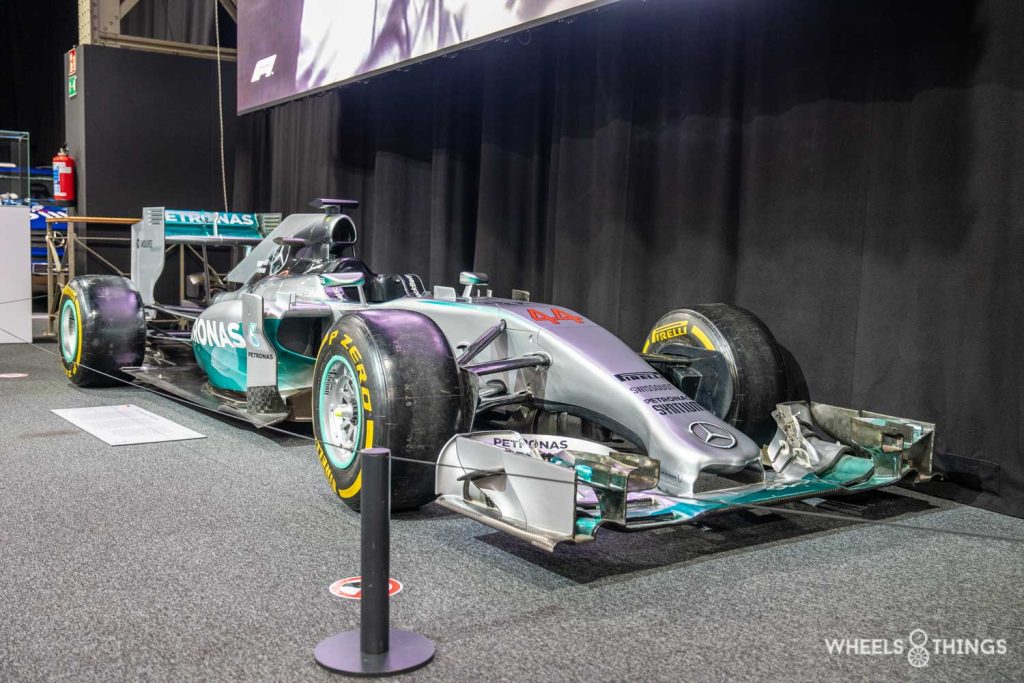
We conclude our report with the AMG One. This AMG One is a hybrid hypercar with F1 technology. The car is equipped with a 1.6-litre V6 turbo engine from an F1 racing car. This, in combination with four electric motors, provides a combined power output of 1063 hp and a top speed of 352 km/h. The car was introduced in 2017 during the IAA in Frankfurt. However, its development encountered so many problems that the final delivery was delayed until 2025. Twenty-seven-five units were sold years ago, and even though Mercedes could have sold many more, they chose not to in order to maintain the car’s exclusive character. An interesting documentary about this car has been made, which can be seen on Prime Video and is called “Project One”.
Conclusion
If you are a Mercedes enthusiast and have not yet visited this exhibition, I can only recommend that you hurry. It is really worth it and provides a beautiful and interesting insight into the history of one of the most important brands in the automotive industry.
Tickets can be booked via this link. This also gives you access to the entire museum, which is open 363 days a year. A fun trip to our capital city.